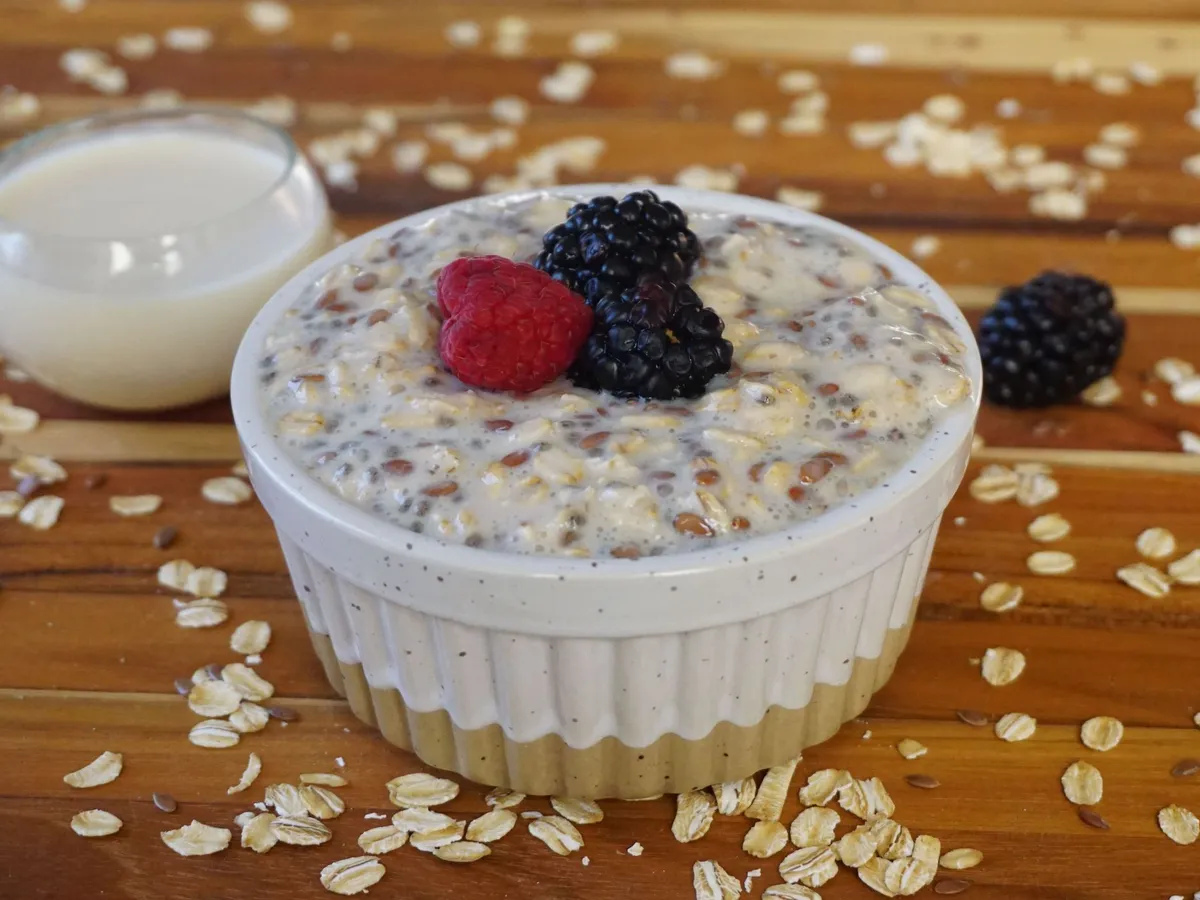
Make-Ahead Overnight Oats
No ratings yetOvernight oats with rolled oats, milk, Greek yogurt, chia and maple syrup. Mix four jars in 10 minutes for grab-and-go breakfasts, no cooking needed. Serves 4, ready in 10 minutes, about 350 calories per serving.
- Total
- 10min
- Serves
- 4
- Per serving
- 350cal
- Steps
- 5
Why this works
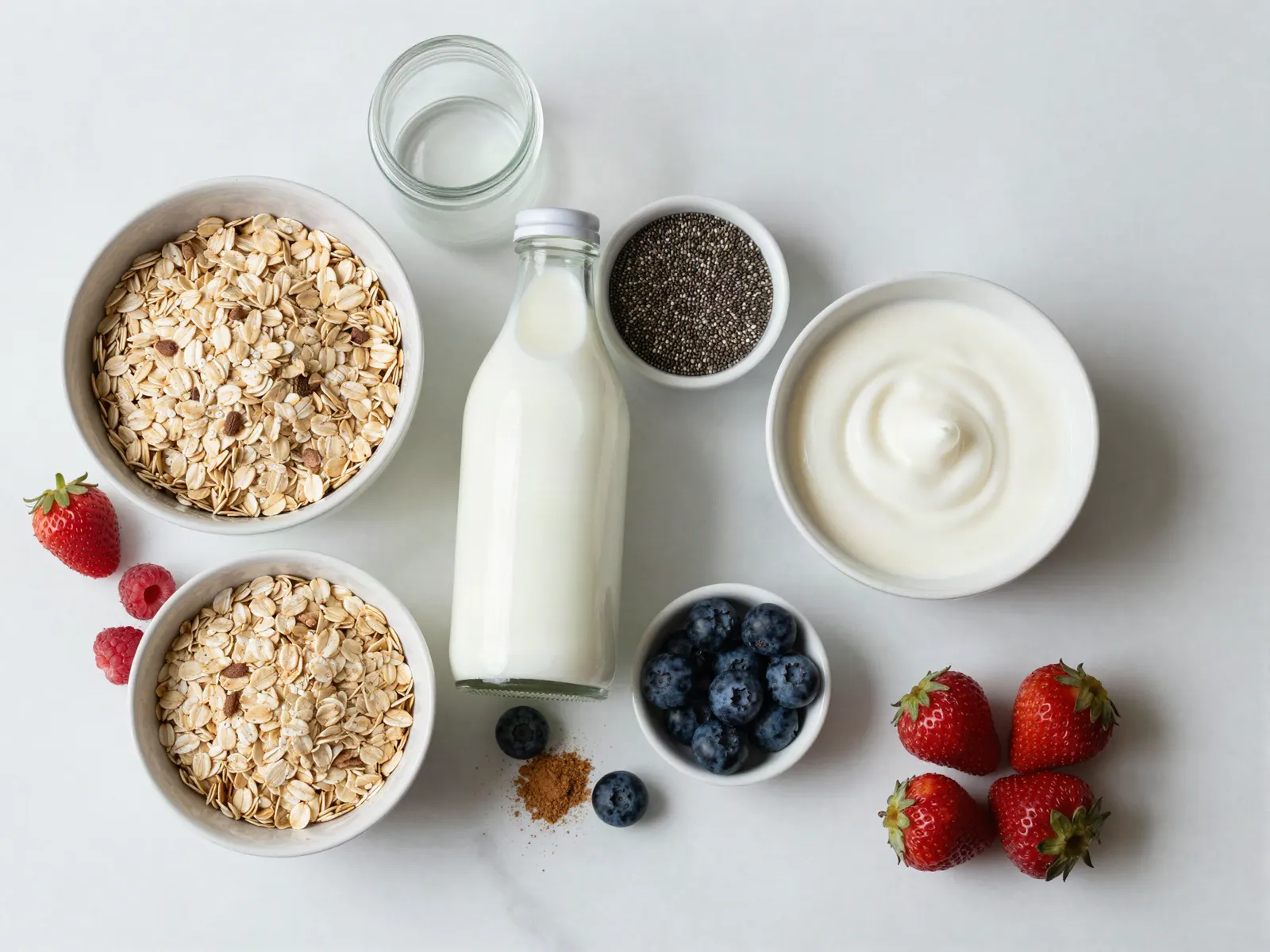
Rolled oats absorb liquid as they sit, softening into a creamy, porridge-like texture without any cooking. Greek yogurt adds protein and tang, and chia seeds absorb liquid and thicken the mixture so it does not separate in the jar.
Make-Ahead Overnight Oats
Overnight oats with rolled oats, milk, Greek yogurt, chia and maple syrup. Mix four jars in 10 minutes for grab-and-go breakfasts, no cooking needed.
- Prep
- 10 min
- Cook
- 0 min
- Total
- 10 min
- Serves
- 4
Ingredients
Scaling changes amounts only; pan size and cooking times may need adjusting. Metric amounts are rounded conversions.
Contains: milk
Instructions
- In a large bowl or measuring cup, whisk the milk, yogurt, chia seeds, maple syrup, vanilla, cinnamon and salt until smooth.
What to look for
In a large bowl or a 4-cup measuring cup, combine the 2 cups milk, 1 cup Greek yogurt, 2 tablespoons chia seeds, 2 tablespoons maple syrup or honey, 1 teaspoon vanilla, the cinnamon and 1/8 teaspoon salt. Whisk until no streaks of yogurt remain and the chia seeds are spread evenly through the liquid rather than floating in a clump on top.
Greek yogurt is thick, so it helps to whisk it with a splash of the milk first and then add the rest. Mixing the chia into the liquid before the oats go in is what prevents gel-coated clumps later. The salt is small but important: it rounds out the sweetness and keeps the oats from tasting flat. If your honey is very thick, warm it for a few seconds so it blends in.
- Stir in the oats until everything is evenly moistened.
What to look for
Add the 2 cups old-fashioned rolled oats and stir with a spatula until every flake is coated. The mixture will look loose and soupy at this point, a bit like thin batter, with oats floating in plenty of liquid. That is correct: the oats and chia will absorb a lot of it overnight. Scrape the sides and bottom of the bowl to catch any dry oats, since dry pockets stay hard and papery even after hours in the refrigerator.
Stir for another 30 seconds or so; chia seeds tend to clump in the first minute, and a second stir breaks up any small clusters. If the mixture already looks thick and stiff right after mixing, your yogurt may be especially thick, and you can add 2 to 4 tablespoons more milk so the oats have enough liquid to soften.
- Divide among 4 jars or containers (each about 1 1/2 cups capacity) and seal.
What to look for
Spoon the mixture evenly into 4 jars or containers that hold about 1 1/2 cups each. Stir the bowl between scoops, because the oats and chia settle to the bottom and the last jar can end up mostly liquid if you do not. Each jar should be filled a little more than halfway, leaving headspace for stirring and for fruit on top in the morning.
Wipe the rims clean and seal with tight-fitting lids. A good seal keeps the oats from absorbing refrigerator odors and stops the surface from drying into a crust. Wide-mouth jars make it easier to stir and eat straight from the container. If you are packing these for a commute, choose containers with screw-top or locking lids so the mixture does not leak if a bag tips over.
- Refrigerate for at least 4 hours, or overnight, until the oats are soft and the mixture is thick.
What to look for
Refrigerate the jars for at least 4 hours, or overnight. During this time the oats soften and swell and the chia seeds form a gel that thickens everything into a spoonable, porridge-like texture. After about 4 hours, the oats should be soft with a slight chew; after a full night, they are creamier and softer still.
Tip a jar slightly to check: the mixture should move as one mass rather than sloshing, with no visible pool of liquid on top. If it is still runny, the oats need more time, or the ratio needs adjusting next batch with a little less milk. Store the jars toward the back of the refrigerator, where the temperature is steadier than in the door, since this is a dairy-based dish meant to keep for several days.
- Stir before eating, loosening with a splash of milk if needed. Top with fruit just before serving.
What to look for
Before eating, stir the oats well from the bottom up, since the thickest part tends to settle. If they are thicker than you like, stir in a splash of milk, a tablespoon at a time, until loose and creamy. Taste and add a drizzle more maple syrup if the yogurt makes it too tart for you. Top each jar with about 1/2 cup of berries or chopped fruit right before serving.
Adding fruit at the last moment keeps it firm and stops its juices from thinning the oats and staining them. Frozen berries can go on straight from the freezer; they thaw in 10 to 15 minutes on the counter or during a commute and release a bit of juice that works like a quick sauce. Eat cold, or warm a portion as described in the FAQ.
Supper HQ · https://supperhq.com/recipes/overnight-oats/
Good to know
Swaps & substitutions
| Ingredient | Why it's there | Substitute | What changes |
|---|---|---|---|
| Old-fashioned rolled oats | Soften overnight while keeping some chew | Gluten-free rolled oats, or quick oats | Gluten-free oats behave the same; quick oats soften faster but turn mushy |
| Milk | Main liquid the oats absorb | Unsweetened almond, soy, oat or coconut milk | Thinner plant milks give a looser texture; oat and soy milk are creamier; nut and soy milks add allergens |
| Plain Greek yogurt | Thickness, tang and protein | Regular plain yogurt, plant-based yogurt, or an extra 1/2 cup milk | Regular yogurt is thinner, so use 1/4 cup less milk; plant yogurt is often sweeter; skipping yogurt makes it less creamy and tangy |
| Chia seeds | Absorb liquid and stop the mixture separating | Ground flaxseed, 2 tbsp | Slightly nuttier and a little less thick; no visible seeds |
| Maple syrup or honey | Sweetness | Brown sugar, 2 tbsp, or 1/2 mashed ripe banana | Brown sugar adds a caramel note; banana adds sweetness and body but browns slightly |
| Vanilla extract | Rounds out the flavor | 1/2 tsp almond extract, or omit | Almond extract is stronger, so use half; omitting it makes the oats taste plainer |
| Ground cinnamon | Warm spice | Pumpkin pie spice or apple pie spice | Adds nutmeg, ginger or allspice notes |
Tips & common mistakes
- Whisk the chia seeds into the liquid before adding the oats so they do not clump.
- Stir until every oat is moistened; dry pockets stay hard.
- Leave a little headspace in each jar so there is room to stir before eating.
- Give the oats at least 4 hours to soften; overnight gives the softest texture.
- Add the fruit just before eating so it stays firm and does not water down the oats.
Common mistakes
- Oats that are still runny in the morning. This usually means a short soak or a thin yogurt. Give the jars more time in the refrigerator, or stir in another spoonful of chia seeds and wait for it to thicken.
- Stirring fresh pineapple or kiwi into the jars the night before. Both contain enzymes that break down dairy proteins and can make the milk and yogurt taste bitter. Add them on top just before eating.
- Leaving the jars loosely covered. Open containers pick up refrigerator odors and the top layer dries out. Use jars with tight-fitting lids.
Storage & make-ahead
Keep sealed in the refrigerator and eat within 3 to 4 days, the USDA window for refrigerated prepared foods. Add fresh fruit on the day you eat it so it stays firm.
- Prep ahead: measure the oats, chia seeds, cinnamon and salt into the jars or one airtight container and keep them in the pantry. The night before, whisk in the milk, yogurt, maple syrup and vanilla.
- Freezing: overnight oats can be frozen in freezer-safe jars with headspace for expansion, but the yogurt can turn slightly grainy and the oats softer after thawing. For best quality, use them within 3 to 4 months.
- Thawing: thaw the jars in the refrigerator, stir well and loosen with milk. Add fresh fruit after thawing; frozen-then-thawed berries turn soft and release juice.
Scaling & serving
The recipe makes four jars, but the ratio scales cleanly for a household or a full work week. Keep the proportion of 1 part oats to about 1 part milk and 1/2 part yogurt by volume, and add chia at roughly 1 tablespoon per cup of oats. For a big batch, stir everything together in a large bowl first so the chia is evenly distributed, then divide it among jars with a measuring cup so every portion gets the same amount of liquid.
Wide-mouth pint jars are easiest to fill and eat from. Add fresh fruit to only the portions you will eat in the next day or two and keep the rest plain; fruit softens and releases juice as it sits. Store the jars toward the back of the refrigerator, where the temperature is most stable, rather than in the door.
Nutrition per serving
- Calories
- 350
- Protein
- 17 g
- Carbs
- 56 g
- Fiber
- 8 g
- Sugar
- 20 g
- Fat
- 7 g
- Sat. fat
- 2.5 g
- Sodium
- 140 mg
How we calculated this
Approximate values for 1 of 4 servings, calculated from the ingredient list using USDA FoodData Central data (computed 2026-11-08). Raw ingredient weights are used, so fat lost in cooking is not subtracted, and brands vary, especially for sodium in broth, beans and salsa. Not a substitute for professional dietary advice.
Quick answers
Can I use quick oats or steel-cut oats?
Quick oats soften faster but turn mushy. Steel-cut oats stay very firm after an overnight soak and are better cooked. Old-fashioned rolled oats give the best texture.
Are overnight oats gluten-free?
Oats do not contain gluten, but they are often grown and processed alongside wheat. If you need to avoid gluten, buy oats labeled gluten-free; under FDA rules those must contain less than 20 ppm gluten.
Can I eat them warm?
Yes. Microwave a portion in a microwave-safe container in 30-second bursts, stirring between each, until warm. Add a splash of milk since the oats thicken as they heat.
Is it okay to eat oats that have not been cooked?
Yes. Rolled oats are steamed and flattened during processing, which is why they soften enough to eat after soaking. The overnight soak makes them tender and easier to chew than dry oats. If you find raw oats hard on your stomach, warming a portion before eating is an easy alternative.
More from A Simple Weekly Meal Prep Plan (With 4 Make-Ahead Recipes)
Read the guide

Ratings and reviews
Loading ratings…
Sources
Drafted with AI assistance and checked against the sources above by a human editor before publication. See our editorial policy and corrections.
Kitchen reference: How Long Does Cooked Chicken Last in the Fridge? · Cups to Grams and Other Kitchen Measurement Conversions · Safe Internal Temp for Chicken, Pork, Beef, Eggs and Fish
More dinners to try
All recipes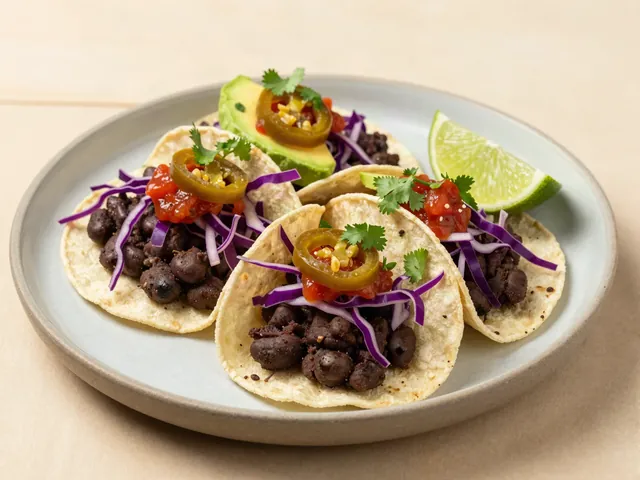
Pantry Black Bean Tacos
Black bean tacos from canned beans simmered with onion, garlic and cumin, lightly mashed and tucked into warm corn tortillas. Vegetarian, in 25 minutes.
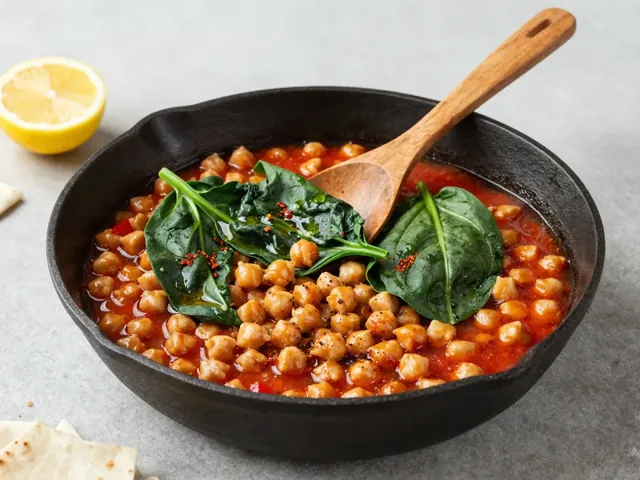
Pantry Chickpea and Tomato Skillet
A chickpea and tomato skillet from canned chickpeas, canned tomatoes and pantry spices, ready in 25 minutes. Serve with rice, crusty bread or a fried egg.

Pantry Pasta e Fagioli
Pasta e fagioli, the Italian pasta-and-bean soup, from canned cannellini beans, canned tomatoes, broth and small pasta. About 35 minutes, mostly hands-off.
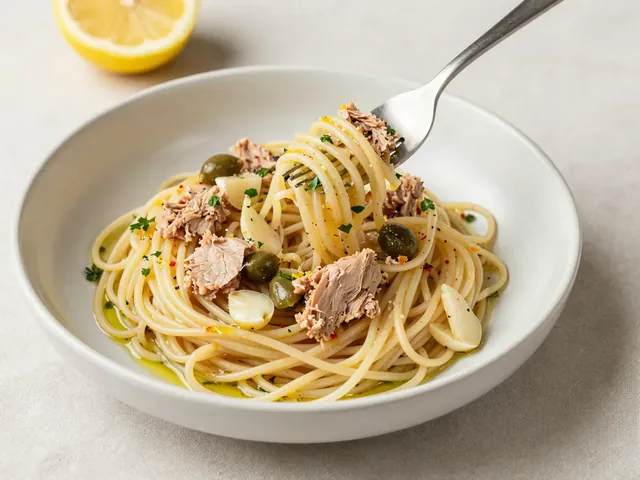
Pantry Tuna Pasta with Garlic and Lemon
Tuna pasta with spaghetti, oil-packed canned tuna, garlic, chili flakes, lemon and starchy pasta water. A 20-minute pantry dinner for busy weeknights.