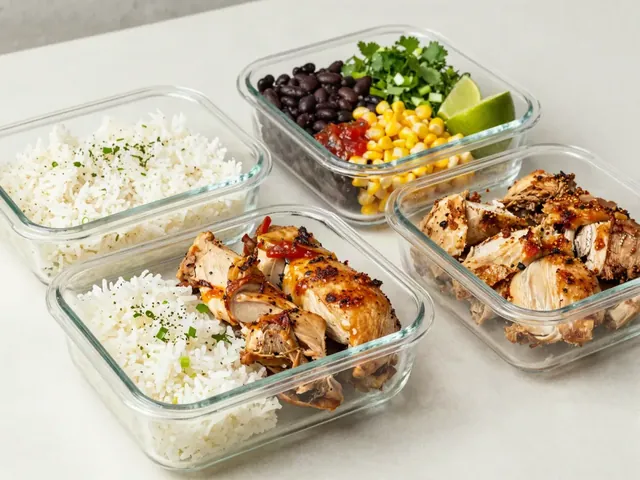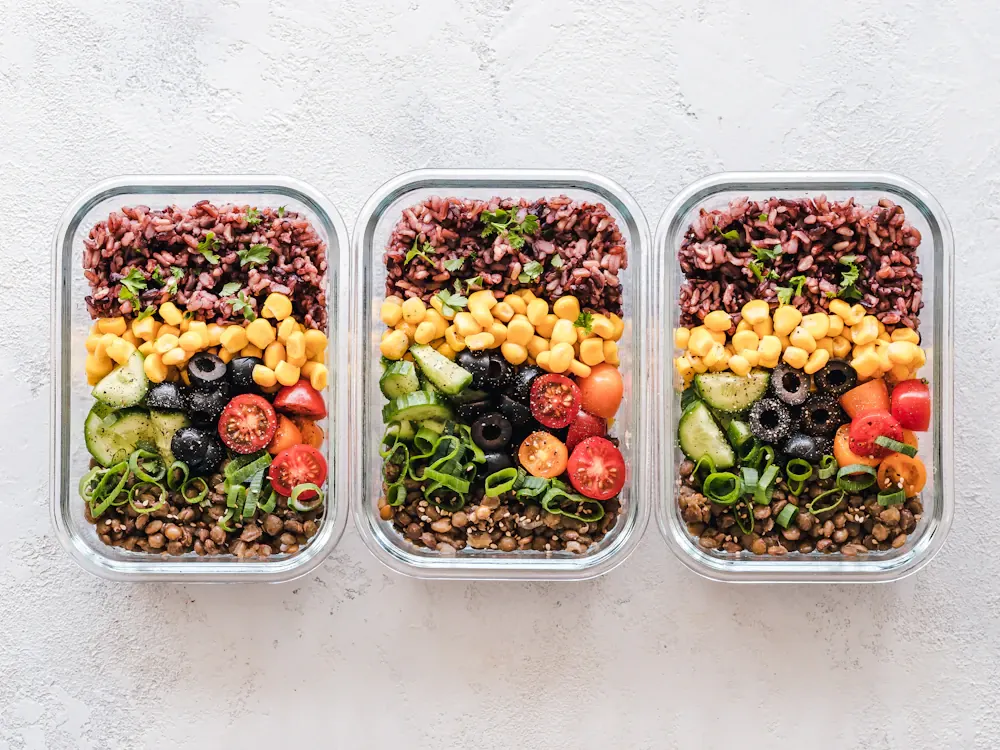
Short storage times for refrigerated food keep it from spoiling or becoming unsafe to eat. The times below come from the federal Cold Food Storage Chart on FoodSafety.gov. They assume a refrigerator at 40°F (4°C) or below and a freezer at 0°F (-18°C) or below.
Freezer times are for quality only. Food kept frozen continuously at 0°F or below stays safe indefinitely; after the listed time it may lose flavor and texture.
Leftovers and cooked food
| Food | Refrigerator | Freezer |
|---|---|---|
| Cooked meat or poultry | 3 to 4 days | 2 to 6 months |
| Soups and stews (with vegetables or meat) | 3 to 4 days | 2 to 3 months |
| Pizza | 3 to 4 days | 1 to 2 months |
| Chicken nuggets or patties | 3 to 4 days | 1 to 3 months |
| Egg, chicken, ham, tuna and macaroni salads | 3 to 4 days | Does not freeze well |
| Casseroles with eggs (after baking) | 3 to 4 days | 2 to 3 months |
When you reheat leftovers, bring them to 165°F (73.9°C), the USDA's safe minimum for leftovers. See our safe internal temperatures chart.
Raw meat and poultry
| Food | Refrigerator | Freezer |
|---|---|---|
| Chicken or turkey, whole | 1 to 2 days | 1 year |
| Chicken or turkey, pieces | 1 to 2 days | 9 months |
| Ground beef, turkey, chicken, pork, veal, lamb and mixtures | 1 to 2 days | 3 to 4 months |
| Beef, veal, lamb and pork steaks, chops and roasts | 3 to 5 days | 4 to 12 months |
| Raw sausage (chicken, turkey, pork or beef) | 1 to 2 days | 1 to 2 months |
| Fully cooked sausage | 1 week | 1 to 2 months |
| Bacon | 1 week | 1 month |
Fish and shellfish
| Food | Refrigerator | Freezer |
|---|---|---|
| Fatty fish (salmon, tuna, catfish, mackerel) | 1 to 3 days | 2 to 3 months |
| Lean fish (cod, flounder, haddock, halibut, sole) | 1 to 3 days | 6 to 8 months |
| Shrimp and crayfish | 3 to 5 days | 6 to 18 months |
| Fresh crab meat or lobster | 2 to 4 days | 2 to 4 months |
Eggs
| Food | Refrigerator | Freezer |
|---|---|---|
| Raw eggs in shell | 3 to 5 weeks | Do not freeze in shell; beat yolks and whites together, then freeze |
| Raw egg whites and yolks | 2 to 4 days | 12 months (yolks do not freeze well) |
| Hard-cooked eggs | 1 week | Do not freeze |
Deli meats and hot dogs
| Food | Refrigerator | Freezer |
|---|---|---|
| Luncheon meat, opened or deli sliced | 3 to 5 days | 1 to 2 months |
| Luncheon meat, unopened package | 2 weeks | 1 to 2 months |
| Hot dogs, opened package | 1 week | 1 to 2 months |
| Hot dogs, unopened package | 2 weeks | 1 to 2 months |
Tips for meal prep
- Label containers with the date you cooked the food, so the 3-to-4-day window is easy to track.
- Portion leftovers you will not eat within 3 to 4 days into the freezer right away, instead of waiting until the last day.
- Keep a refrigerator thermometer inside the fridge to confirm it stays at 40°F or below.
For more than 650 other foods, the federal FoodKeeper tool linked from the FoodSafety.gov chart lists storage times item by item.
How to read the storage times
The times in the tables count from the day the food was cooked, for leftovers, or from the day you bought or opened it, for raw and packaged foods. A few worked examples show how that plays out in a normal week:
- Sunday roast chicken. Cooked meat or poultry keeps 3 to 4 days in the refrigerator, so leftovers from Sunday dinner should be eaten by Wednesday or Thursday. Anything you will not finish by then belongs in the freezer, where it keeps its best quality for 2 to 6 months.
- Ground beef bought on Saturday. Raw ground meat lasts only 1 to 2 days in the fridge. Cook it by Sunday or Monday, or freeze it on Saturday. Once cooked, it starts a fresh 3-to-4-day window as a leftover.
- Pork chops bought on Monday. Raw steaks, chops and roasts keep 3 to 5 days, so they can wait until Wednesday, Thursday or Friday.
- A big pot of chili or soup. Soups and stews last 3 to 4 days in the fridge and 2 to 3 months in the freezer for best quality. Freeze individual portions on the day you cook.
- Salmon fillets. Fatty fish keeps only 1 to 3 days raw in the refrigerator. Plan to cook it soon after buying, such as in our sheet-pan salmon with green beans, or freeze it right away.
- An opened package of hot dogs. Opened hot dogs keep 1 week; an unopened package keeps 2 weeks.
If you are not sure when something was cooked, the safest choice is to throw it out. That is why labeling with the date matters so much.
More detail
Set up your refrigerator and freezer
Storage times only hold if the appliances are cold enough. The chart assumes a refrigerator at 40°F or below and a freezer at 0°F or below.
- Use an appliance thermometer. The numbered dial inside many refrigerators is a setting, not a temperature. A thermometer placed on a middle shelf tells you the actual temperature. Put another in the freezer.
- Store raw meat, poultry and fish on the bottom shelf, in a container or on a plate, so juices cannot drip onto ready-to-eat food below.
- Keep ready-to-eat foods and leftovers above raw foods.
- Do not overpack. Cold air needs room to circulate. A refrigerator crammed full can have warm spots.
- Use the door for condiments and drinks rather than raw meat or leftovers, because the door is opened constantly.
- Clean up spills promptly, especially juices from raw meat, with hot, soapy water.
Cool leftovers quickly
The most important storage step happens before food goes into the refrigerator. Bacteria grow rapidly between 40°F and 140°F, so cooked food should spend as little time in that range as possible.
- Refrigerate within 2 hours of cooking, or within 1 hour if the temperature is above 90°F, such as at an outdoor meal on a hot day.
- Divide large amounts into small, shallow containers so they chill quickly. A deep pot of soup can stay warm in the center for a long time.
- Cut large roasts and whole poultry into smaller pieces before refrigerating.
- Leave space between containers at first so cold air can reach each one.
Our weekly meal prep plan is built around these rules, with a cooling and packing step at the end of the prep session.
Freezing for the best quality
Frozen food kept at 0°F stays safe indefinitely, but its flavor and texture decline over time. These habits help it taste better when you thaw it:
- Wrap food airtight. Exposure to air dries the surface and causes freezer burn: dry, discolored patches with a leathery texture. It is a quality problem; cut those spots away before or after cooking if you like.
- Use freezer-safe containers or heavy freezer bags, and press out as much air as possible from bags.
- Leave headspace in containers of soup, stew or chili, because liquids expand as they freeze.
- Freeze in portions. Single servings freeze faster, thaw faster and let you take out only what you need.
- Freeze bags flat on a tray, then stack them once solid.
- Label with the contents and the date. The freezer column in the tables only helps if you know when something went in.
- Freeze early. Food frozen the day it was cooked or bought keeps better than food frozen on its last day in the refrigerator.
Some foods do not freeze well. The chart marks egg, chicken, ham, tuna and macaroni salads as not freezing well, says hard-cooked eggs and raw eggs in the shell should not be frozen, and notes that raw yolks do not freeze well.
From the store to the fridge
Storage times assume food went into cold storage promptly. A few habits on shopping day protect that:
- Shop for cold foods last. Pick up meat, poultry, fish, dairy and frozen foods at the end of your trip, so they spend less time out of the cold.
- Bag raw meat separately. Put packages of raw meat, poultry and fish in their own bags so juices cannot leak onto produce or ready-to-eat foods.
- Go straight home when you have perishables in the car, and put them away first. On hot days, an insulated bag or cooler helps, since the 2-hour limit shrinks to 1 hour above 90°F.
- Decide on freezing right away. If you will not cook raw ground meat or sausage within 1 to 2 days, or poultry within 1 to 2 days, freeze it in its package with an extra layer of wrap, or repackage it in portions.
- Write the purchase date on packages that go into the freezer, so you can judge quality later.
A weekly fridge check
Set aside five minutes once a week, ideally before you shop, to look through the refrigerator. Move older leftovers to the front where you will see them, and plan a meal around anything that is close to the end of its 3-to-4-day window. Throw out anything past its time or anything you cannot date. Check the thermometer reading while you are there to confirm the refrigerator is still at 40°F or below. Finally, glance at the freezer labels and pull out anything approaching the end of its quality window to use that week; a portion of frozen soup or chili makes an easy dinner. Our pantry dinners guide applies the same first-in, first-out idea to shelf-stable food.
Thawing safely
There are three safe ways to thaw frozen food:
- In the refrigerator. The slowest method, but the easiest. Plan ahead: move food from the freezer the day before. Small portions may thaw overnight; large items take longer.
- In cold water. Seal the food in a leak-proof bag and submerge it in cold water. Cook food thawed this way before refreezing it.
- In the microwave. Use the defrost setting, then heat the food to 165°F right away, because parts of it may begin to cook.
Do not thaw food on the counter. The outside can sit between 40°F and 140°F, where bacteria grow rapidly, while the center is still frozen.
Reheating stored food
Reheat leftovers to 165°F, measured with a food thermometer, and bring sauces, soups and gravies to a rolling boil. In the microwave, cover the food, stir or rotate it partway through, and check the temperature in several spots, since microwaves heat unevenly. Our safe internal temperatures chart explains how to use a thermometer and where to place it.
Common myths
"Freezer times are when food goes bad." The freezer column is for quality only. Food that stays frozen at 0°F or below is safe indefinitely; it may simply taste drier or blander after the listed time.
"Leftovers are good for a week." The chart lists 3 to 4 days in the refrigerator for cooked meat, poultry, soups, stews, pizza and casseroles. After that, freeze them or throw them out.
"Food has to cool to room temperature before it goes in the fridge." Leaving food out to cool keeps it in the range where bacteria grow rapidly. Refrigerate within 2 hours, using shallow containers.
"Thawing on the counter is fine if it is quick." The surface warms into the 40°F to 140°F range while the center is still frozen. Use the refrigerator, cold water or the microwave.
"My fridge is set to the middle, so it must be cold enough." Settings are not temperatures. Use a thermometer and keep the refrigerator at 40°F or below.
"Reheated food just needs to be hot to the touch." Leftovers should reach 165°F in the center, and liquids should come to a rolling boil.
Quick answers
Does freezing make food last forever?
As long as it never thaws and stays at 0°F or below, frozen food remains safe indefinitely. The freezer times in the tables tell you how long it keeps its best flavor and texture.
How long can cooked rice or pasta stay in the fridge?
Treat them like other cooked leftovers: refrigerate within 2 hours of cooking and use within 3 to 4 days, or freeze them. Reheat to 165°F.
Can I freeze leftovers on day 3?
You can freeze leftovers at any point within the 3-to-4-day refrigerator window. The quality will be better if you freeze them sooner, ideally on the day you cook.
How long do raw eggs keep?
Raw eggs in the shell keep 3 to 5 weeks in the refrigerator. Do not freeze them in the shell; beat the yolks and whites together first if you want to freeze them.
Why do raw sausage and ground meat have such short refrigerator times?
The chart lists 1 to 2 days for raw ground meat and raw sausage, compared with 3 to 5 days for whole steaks, chops and roasts. Plan to cook or freeze ground meat and sausage soon after buying.
What temperature should my refrigerator and freezer be?
The refrigerator should be at 40°F or below and the freezer at 0°F or below. An appliance thermometer is the only way to know for sure.
Can I refreeze food I thawed in cold water?
Cook it first. Food thawed in cold water should be cooked before it goes back in the freezer. The cooked dish can then be frozen as a leftover.
What should I do with leftovers after a power outage?
Keep the refrigerator and freezer doors closed as much as possible so the cold stays in. Once power returns, check the temperature with an appliance thermometer. Refrigerated perishable food that has been above 40°F for more than 2 hours falls outside the safe rule on this page, and it should be thrown away rather than tasted to check. Frozen food that still feels refrigerator-cold and has been kept at 40°F or below can be cooked or refrozen, although its texture may suffer.
Is it safe to put hot food straight into the refrigerator?
Yes. Hot food can go directly into the refrigerator; there is no need to let it cool on the counter first, and waiting only adds time in the 40°F to 140°F range where bacteria grow rapidly. Divide large batches into shallow containers so they chill quickly, and leave a little space around them so cold air can circulate.
How long do deli meats keep once opened?
Once a package of luncheon meat is opened or the meat is sliced at the deli counter, the chart gives it 3 to 5 days in the fridge. An unopened package keeps 2 weeks.
Sources
- FoodSafety.gov — Cold Food Storage Chart (date last reviewed Sep 19, 2023) (checked 2026-11-08)
- USDA FSIS — Safe Minimum Internal Temperature Chart (checked 2026-11-08)
Drafted with AI assistance and checked against the sources above by a human editor before publication. See our editorial policy.