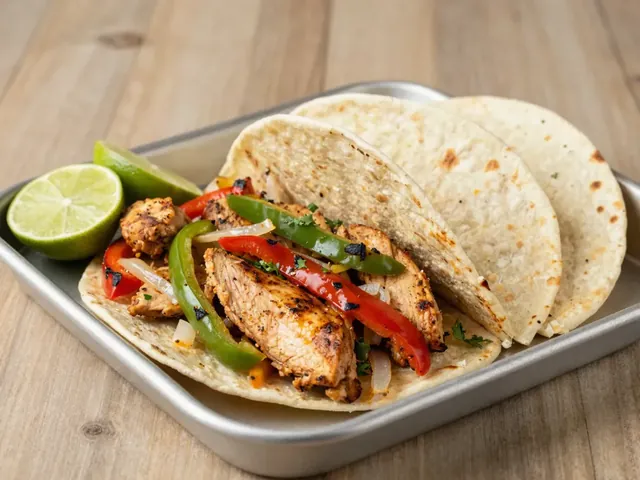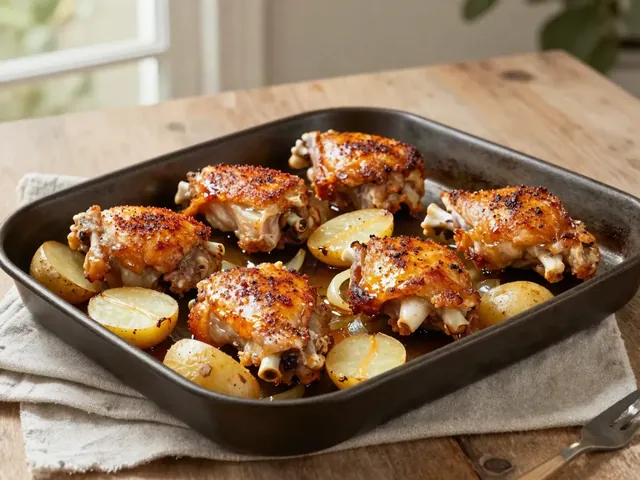
Color and texture are not reliable signs that meat is safely cooked. The only reliable check is a food thermometer. The U.S. Department of Agriculture's Food Safety and Inspection Service (USDA FSIS) publishes the minimum internal temperatures below; you can always cook food hotter for personal preference.
The chart
| Food | Minimum internal temperature | Rest time |
|---|---|---|
| Beef, pork, veal and lamb steaks, chops and roasts | 145°F (62.8°C) | At least 3 minutes |
| Ground meats (beef, pork, veal, lamb) | 160°F (71.1°C) | — |
| All poultry — breasts, whole bird, legs, thighs, wings, ground poultry, giblets and stuffing | 165°F (73.9°C) | — |
| Ham, fresh or smoked (uncooked) | 145°F (62.8°C) | At least 3 minutes |
| Fully cooked ham, reheating | 140°F (60°C) if packaged in a USDA-inspected plant; otherwise 165°F (73.9°C) | — |
| Eggs | 160°F (71.1°C) | — |
| Fish and shellfish | 145°F (62.8°C) | — |
| Leftovers | 165°F (73.9°C) | — |
| Casseroles | 165°F (73.9°C) | — |
How to take an accurate reading
- Insert the thermometer into the thickest part of the food, away from bone, fat and gristle.
- For thin pieces such as burgers or chicken breasts, insert the probe from the side so the tip sits in the center.
- Check in more than one spot for large or uneven pieces.
- Measure before you take the food off the heat, as the USDA chart specifies.
What "rest time" means
For whole cuts of beef, pork, veal and lamb, and for uncooked ham, the USDA asks you to let the meat rest for at least 3 minutes after it reaches 145°F. During that time the temperature stays high, which is part of what makes the meat safe. Ground meats and poultry have no rest time in the chart — they must reach their full temperature.
Why ground meat needs a higher temperature
Grinding mixes meat from the surface, where bacteria live, into the whole batch. That is why ground meats are listed at 160°F while whole steaks and roasts are listed at 145°F.
Note that ground poultry is not in the ground-meat row: ground chicken and turkey follow the poultry line, so they need 165°F. The same goes for chicken and turkey sausages and burgers.
More detail
How to use a food thermometer
Types of food thermometers
Several kinds of thermometer are sold for home kitchens. Any of them works if it is accurate and you use it correctly; they differ mainly in speed and convenience.
- Digital instant-read thermometers give a reading within seconds and have a thin probe that leaves a small hole. They are the most versatile choice for steaks, chops, chicken pieces, burgers and fish. They are not meant to stay in the food while it cooks in the oven.
- Dial instant-read thermometers work the same way but usually take longer to settle and need to be inserted deeper, because the sensing area covers a length of the stem rather than just the tip. They suit thick roasts and casseroles better than thin foods.
- Oven-safe dial thermometers stay in a roast or whole bird for the entire cooking time. Insert one at the start, in the thickest part, and read it through the oven window. Confirm the final temperature in a second spot with an instant-read thermometer.
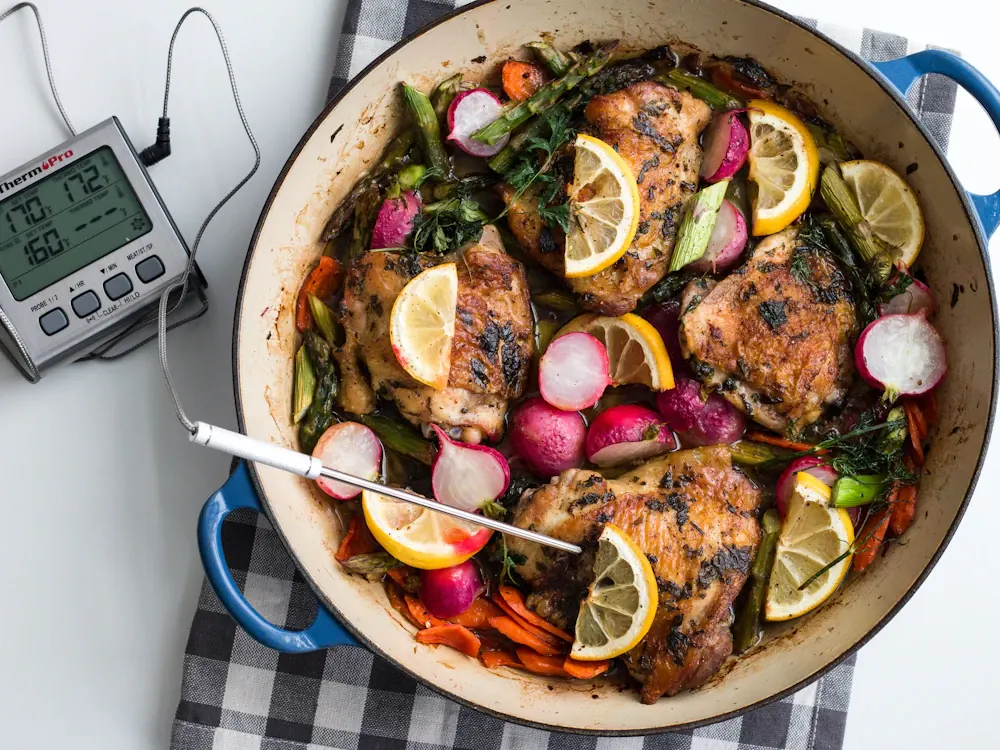
- Probe thermometers with a cable have a probe that stays in the food, connected to a display outside the oven. Many can be set to alert you when the food reaches a target temperature, which is useful for large roasts and whole poultry.
- Pop-up timers come in some whole turkeys and chickens. They show only that one spot has reached a certain temperature, so check the bird in several places with a regular thermometer as well.
- Thermometer forks combine a fork and a sensor for grilling. Their sensing tip must be fully inside the thickest section of the food, which is hard with thin cuts.
Whatever type you use, read the manufacturer's instructions to find out how deep the stem needs to go and how long it takes to give an accurate reading.
Where to put the probe
The general rule is the thickest part, away from bone, fat and gristle, since bone and fat can heat differently from the meat around them. Specific foods have their own quirks:
- Whole poultry: check the innermost part of the thigh and wing and the thickest part of the breast. Every spot must reach 165°F. If the bird is stuffed, the center of the stuffing must also reach 165°F.
- Chicken pieces: insert the probe into the thickest part of each piece, not touching the bone. Pieces of different sizes finish at different times, so check more than one.
- Roasts: insert the probe into the center of the thickest part. Large roasts can vary from end to end, so check a second spot.
- Steaks and chops: insert the probe from the side so the tip sits in the middle of the thickest part.
- Burgers and patties: insert the probe from the side into the center of the patty, as described above.
- Casseroles and egg dishes: check the center, which is the last part to heat through. Both should reach 160°F for egg dishes and 165°F for casseroles.
- Fish fillets: insert the probe into the thickest part of the fillet from the side.
Check your thermometer with the ice-water method
A thermometer that reads wrong gives you false confidence. The ice-water method is a simple way to check accuracy at home, and it is worth doing when you buy a new thermometer and from time to time after that, or if it has been dropped.
- Fill a glass to the top with ice cubes, then add cold water to fill the gaps.
- Stir and let it stand for a few minutes so the water chills thoroughly.
- Put the thermometer's stem into the ice water, keeping the tip away from the sides and bottom of the glass, and wait for the reading to settle.
- It should read 32°F, the freezing point of water.
If the reading is off, follow the manufacturer's instructions to adjust it. Many dial thermometers have a small nut under the dial that you turn while the stem is in the ice water; many digital models have a reset or calibration button. If yours cannot be adjusted, note how far off it reads and allow for that difference every time, or replace it.
Keep the thermometer clean
Wash the probe in hot, soapy water after each use. If you check a piece of meat, find it is not done and need to check again later, clean the probe before reinserting it, so you do not carry bacteria from the undercooked surface back into the food.
Worked examples
Roast chicken. Check the breast where it is thickest, the innermost part of the thigh and the wing. All three need to read 165°F before the chicken comes out of the oven. If the breast is done but the thigh is not, keep roasting; the thigh is the deciding spot.
Burgers. A beef or pork burger is ground meat, so it needs 160°F. A turkey or chicken burger is ground poultry, so it needs 165°F. Insert the probe from the side into the middle of the thickest patty.
Pork chops or a pork roast. Cook to 145°F in the thickest part, take the meat off the heat, and let it rest for at least 3 minutes before cutting. The rest is part of the safety process, not just a step for juicier meat.
Sheet-pan salmon. Fish needs 145°F. Fillets are thin, so check from the side and start checking early; in our sheet-pan salmon with green beans the fish roasts only briefly.
Sausages. Raw pork or beef sausage is ground meat, at 160°F. Chicken or turkey sausage is ground poultry, at 165°F. Check the middle of the thickest link, as in our sheet-pan sausage and peppers.
Turkey chili. The ground turkey must reach 165°F. Check it after browning, before adding the liquid; our big-batch turkey chili then simmers it well beyond that.
Reheating a fully cooked ham. If the ham was packaged in a USDA-inspected plant, reheat it to 140°F. If it was not, reheat it to 165°F. When in doubt about where a ham was packaged, use 165°F.
Leftover lasagna or casserole. Reheat to 165°F in the center. In the microwave, cover the dish, rotate or stir it partway through, and check the temperature in several spots, because microwaves heat unevenly.
When the recipe time and the thermometer disagree
Cooking times in recipes, including ours, are estimates. Ovens run hot or cool, pieces of meat vary in thickness, and a cold piece straight from the refrigerator takes longer than one that sat out briefly during prep. When the timer and the thermometer disagree, the thermometer wins.
- Under temperature when the timer goes off: keep cooking and check again every few minutes. Thin cuts can rise quickly, so do not walk away for long.
- Over temperature well before the timer: the food is safe, though it may be drier than intended. Next time, start checking earlier, and consider whether your oven runs hot; an oven thermometer will tell you.
- Different readings in different spots: go by the lowest reading. A roast or whole bird is done only when its coolest part reaches the minimum.
- Uneven pieces on one pan: take pieces out as each one reaches its temperature rather than overcooking the smaller ones while the largest catches up.
Thermometer habits for busy weeknights
A thermometer only helps if it is within reach. Keep it in the drawer next to the stove rather than in a gadget drawer across the kitchen, and keep a spare battery for digital models. Check the first piece of meat a few minutes before you expect it to be done, so you learn how your oven and pans behave.
For sheet-pan dinners, check the largest piece of protein on the pan, since it will be the last to finish; our sheet-pan dinners guide explains how to cut and time everything so it finishes together. And when you cook ahead for the week, check doneness before cooling and packing; our weekly meal prep plan builds that step into the prep order.
Temperatures beyond cooking
Reaching the right temperature is only part of the job. What happens before and after cooking matters too.
- Keep food out of the danger zone. Bacteria grow rapidly between 40°F and 140°F. Keep cold food cold and hot food hot.
- Refrigerate within 2 hours of cooking, or within 1 hour if the temperature is above 90°F, such as at a summer cookout.
- Keep the refrigerator at 40°F or below and the freezer at 0°F. An appliance thermometer inside each one is the easiest way to be sure.
- Reheat leftovers to 165°F, and bring sauces, soups and gravies to a rolling boil.
- Thaw safely: in the refrigerator; in cold water, sealed in a leak-proof bag, cooking the food before you refreeze it; or in the microwave, then heating the food to 165°F right away.
Our fridge and freezer storage guide lists how long different foods keep once they are cooked and chilled.
Common myths
"If the juices run clear, the chicken is done." Color, including the color of the juices, is not a reliable sign of doneness. Only a thermometer reading of 165°F tells you poultry is safely cooked.
"Brown ground beef is fully cooked." The color of ground meat is not a reliable sign either. Measure it: ground beef needs 160°F.
"Pink means it is unsafe, and no pink means it is safe." Color is unreliable in both directions. The internal temperature is what counts.
"Resting meat is just about juiciness." For steaks, chops and roasts of beef, pork, veal and lamb, the USDA includes at least 3 minutes of rest in its safety guidance, because the temperature stays high during that time.
"Food needs to cool on the counter before it goes in the fridge." Leaving cooked food out for hours puts it in the danger zone, where bacteria grow rapidly. Get it into the refrigerator within 2 hours, or within 1 hour above 90°F, using shallow containers so it cools quickly.
"Leftovers just need to be warm." Leftovers should reach 165°F, and soups, sauces and gravies should come to a rolling boil.
"The microwave heats everything evenly." Microwaves leave cold spots. Cover the food, stir or rotate it, and check several spots.
Quick answers
Can I cook meat hotter than the minimum temperature?
Yes. The temperatures in the chart are minimums for safety. You can cook food to a higher temperature if you prefer it more well done.
Why does poultry need a higher temperature than beef steaks?
The USDA sets a single minimum of 165°F for all poultry, whole or ground, with no rest time. Whole cuts of beef, pork, veal and lamb are listed at 145°F with a rest of at least 3 minutes.
What temperature should eggs reach?
Eggs and egg dishes should reach 160°F. For casseroles and dishes like quiche, check the center.
Do I need to rest ground beef or chicken?
No rest time is listed for ground meats or poultry. They are safe once they reach their full minimum temperature: 160°F for ground meats and 165°F for poultry.
How do I check the temperature of a thin piece of fish?
Slide the thermometer in from the side, to the deepest point of the fillet. Fish is safe at 145°F. Because fillets cook quickly, start checking early.
Should I take the temperature before or after the food comes off the heat?
Before. Measure while the food is still on the heat, so you can keep cooking if it has not reached the minimum. For whole cuts that need resting, the rest begins after the meat reaches 145°F.
What temperature should reheated leftovers reach?
165°F, measured in the center. Bring sauces, soups and gravies to a rolling boil.
How often should I check my thermometer's accuracy?
Check a new thermometer with the ice-water method before you first use it, and repeat the check every so often, especially if the thermometer has been dropped or the readings seem odd.
Sources
- USDA FSIS — Safe Minimum Internal Temperature Chart (page last updated Apr 14, 2025) (checked 2026-11-08)
Drafted with AI assistance and checked against the sources above by a human editor before publication. See our editorial policy.