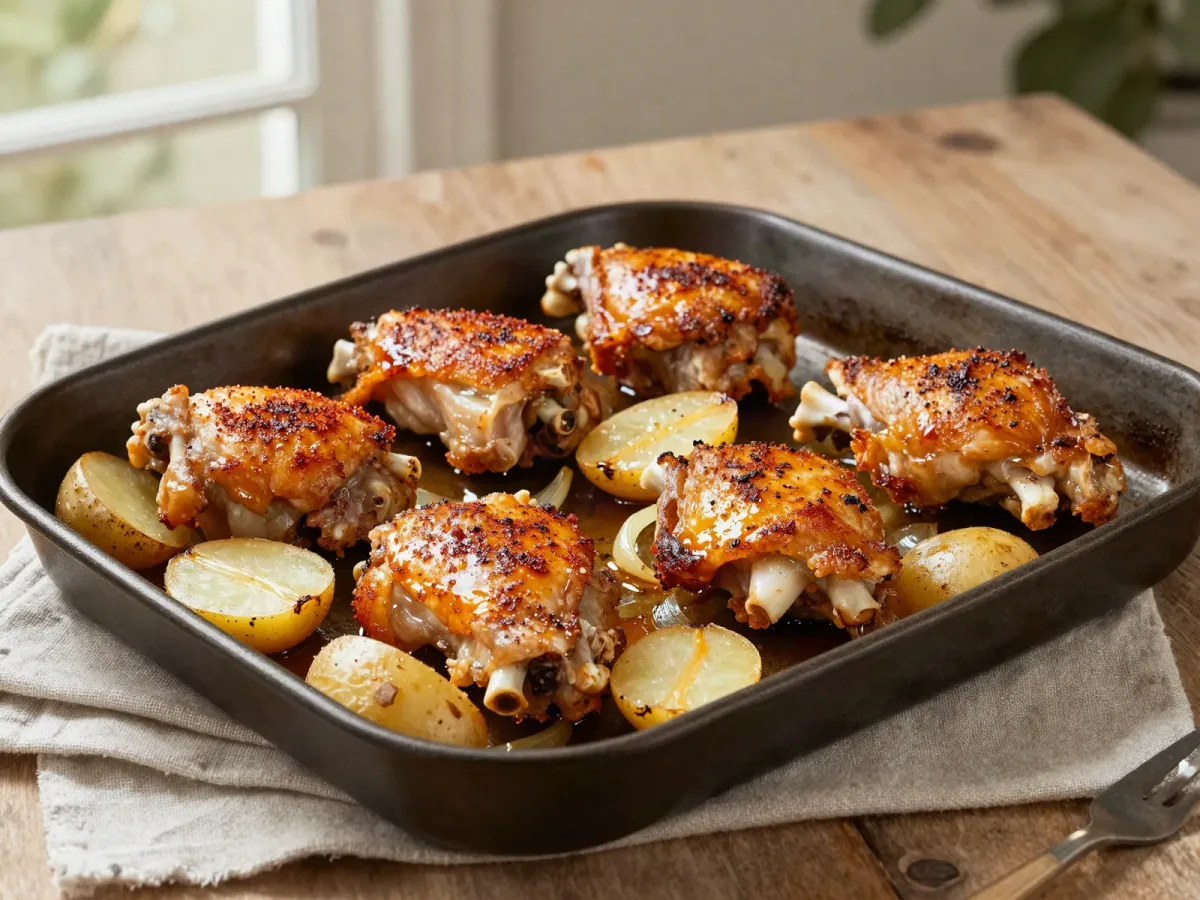
Sheet-Pan Chicken Thighs and Potatoes with Onions
No ratings yetSheet pan chicken thighs and potatoes roasted on one pan with pantry spices. Bone-in thighs cooked to the USDA-safe 165°F inside, and one pan to wash. Serves 4, ready in 60 minutes, about 750 calories per serving.
- Total
- 60min
- Serves
- 4
- Per serving
- 750cal
- Steps
- 7
Why this works
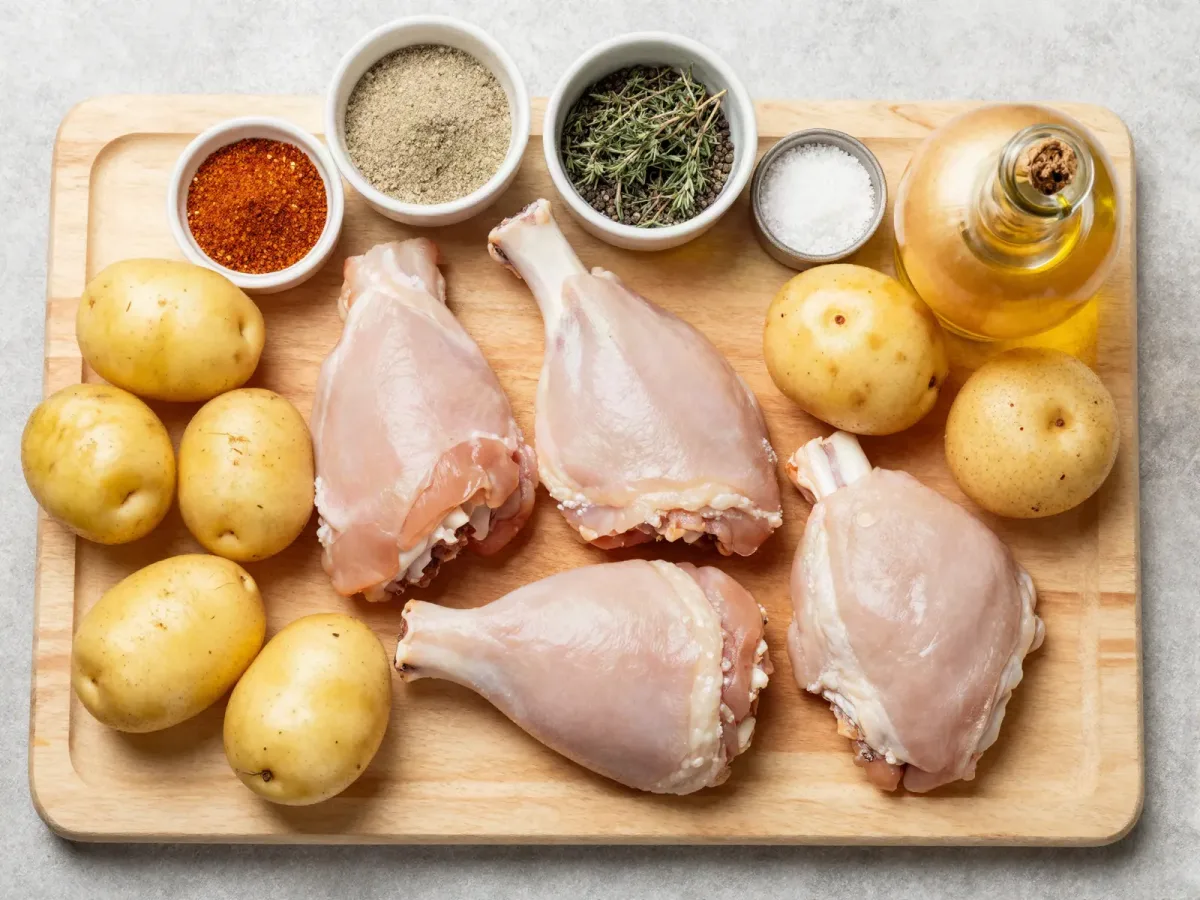
Bone-in, skin-on thighs stay juicy at high oven heat, and their rendered fat seasons the potatoes underneath. Everything here — paprika, garlic powder, dried thyme — is a pantry spice, so there is no fresh-herb shopping.
Sheet-Pan Chicken Thighs and Potatoes with Onions
Sheet pan chicken thighs and potatoes roasted on one pan with pantry spices. Bone-in thighs cooked to the USDA-safe 165°F inside, and one pan to wash.
- Prep
- 15 min
- Cook
- 45 min
- Total
- 60 min
- Serves
- 4
Ingredients
Scaling changes amounts only; pan size and cooking times may need adjusting. Metric amounts are rounded conversions.
Instructions
- Heat the oven to 425°F with a rack in the center. Line a large rimmed sheet pan with foil for easier cleanup, if you like.
What to look for
Set a rack in the center of the oven and heat it to 425°F. That high, steady heat is what renders the fat under the chicken skin and turns it crisp while the potatoes brown underneath. Give the oven the full preheat, usually 15 to 20 minutes; a pan that goes into a still-warming oven leaves the potatoes pale and the skin rubbery.
Line a large rimmed sheet pan with foil if you want easier cleanup. The rim matters here, since bone-in thighs release a good amount of fat and juice that would spill off a flat baking sheet. Use the biggest pan that fits your oven: 8 thighs plus 1 1/2 pounds of potatoes need room. If your pan is small, have a second one ready rather than crowding everything onto one.
- Mix the salt, smoked paprika, garlic powder, thyme and pepper in a small bowl.
What to look for
In a small bowl, stir together the 1 1/2 teaspoons kosher salt, 1 teaspoon smoked paprika, 1 teaspoon garlic powder, 1/2 teaspoon dried thyme and 1/2 teaspoon black pepper until the color is even. Rub the thyme between your fingers as you add it to wake up its aroma. Mixing the seasoning first lets you divide it accurately between the vegetables and the chicken, so neither ends up bland or oversalted.
The blend should smell smoky and herbal. If the paprika smells faint or dusty, it has lost much of its flavor; a fresher jar makes a visible difference in the deep red color of the finished chicken skin. Keep a dry spoon in the bowl rather than your fingers, since you will be handling raw chicken shortly.
- On the sheet pan, toss the potatoes and onion with 2 tablespoons of the oil and about a third of the spice mix. Spread them out in a single layer.
What to look for
Put the halved potatoes and onion wedges directly on the sheet pan. Drizzle with 2 tablespoons of the olive oil and sprinkle with about one-third of the seasoning. Toss with your hands until every piece is shiny and evenly speckled. Then spread them out in a single layer and turn the potatoes cut side down.
The flat cut surface against the hot pan is what develops a golden, crisp face; potatoes resting on their rounded side brown much less. Leave gaps around the edges and in the middle where the chicken thighs will go. Keep the onion wedges attached at the root end so they hold together and soften into sweet, jammy pieces rather than scattering into thin strips that burn.
- Pat the chicken thighs dry with paper towels. Rub them with the remaining 1 tablespoon oil and the rest of the spice mix. Wash your hands and anything that touched the raw chicken.
What to look for
Pat each of the 8 thighs dry with paper towels on both sides, paying special attention to the skin. Moisture is the main reason chicken skin turns out flabby instead of crisp: water has to evaporate before the skin can brown, and wet skin spends too long steaming. Rub the thighs all over with the remaining tablespoon of oil, then sprinkle the remaining seasoning over both sides, pressing it on.
Season under any loose flaps of skin too, since that seasons the meat directly. The skin should look evenly coated in a rusty red layer. When you are done, wash your hands and anything that touched the raw chicken, including the paper towel area, with hot, soapy water before touching other ingredients or tools.
- Nestle the thighs skin side up among the vegetables, leaving a little space between pieces so they roast instead of steam.
What to look for
Nestle the thighs skin side up into the spaces you left among the potatoes and onions. Each thigh should sit directly on the pan or just at the edge of the vegetables, not on top of them. Chicken placed on the potatoes blocks the heat and makes the potatoes beneath steam instead of brown.
Leave a little space between each piece, about a finger's width, so hot air circulates around the sides; pieces crammed together release steam into each other and the skin softens. Smooth out the skin so it covers the meat in an even layer, which helps it crisp uniformly. If the thighs vary in size, place the larger ones toward the outer edges of the pan, where the heat in most ovens is strongest.
- Roast until the potatoes are tender and the chicken reads at least 165°F on a food thermometer in the thickest part of a thigh, away from the bone — start checking at about 35 minutes. Many cooks prefer thighs hotter for a more tender texture; that is a texture choice, not a safety requirement.
What to look for
Roast without opening the oven for the first 30 minutes. Start checking at about 35 minutes. The skin should be deep golden brown and crisp, the fat sizzling, and the potatoes browned on their cut sides and tender when pierced with a knife. To confirm the chicken is safe, insert a food thermometer into the meatiest part of one thigh without touching the bone, since bone conducts heat and gives a false reading.
It should read at least 165°F. Many cooks let thighs go higher because the meat becomes more tender as connective tissue breaks down; that is a texture preference, not a safety requirement. If the chicken is ready but the potatoes are not, move the thighs to a plate and return the potatoes for a few more minutes.
- Rest for 5 minutes, then serve with the pan juices spooned over.
What to look for
Transfer the chicken to a plate or cutting board and let it rest, uncovered, for 5 minutes. Resting lets the juices redistribute through the meat so they do not run out the moment you cut in, and leaving it uncovered keeps the skin from softening under trapped steam.
Meanwhile, use a spatula to loosen the potatoes from the pan and toss them in the rendered fat and juices, which are full of flavor from the paprika and garlic. If there is a large pool of fat, you can spoon some off first. Serve the thighs with the potatoes and onions, spooning the remaining pan juices over the top. A scraping of the browned bits from the pan adds extra savory flavor to each plate.
Supper HQ · https://supperhq.com/recipes/sheet-pan-chicken-thighs-potatoes/
Good to know
Swaps & substitutions
| Ingredient | Why it's there | Substitute | What changes |
|---|---|---|---|
| Bone-in, skin-on chicken thighs | Juicy meat, crisp skin and fat that seasons the potatoes | Bone-in chicken drumsticks, or boneless thighs | Drumsticks take a similar time and are easy to eat; boneless thighs cook faster, so give the potatoes a head start |
| Small yellow potatoes | Creamy interior and thin skin | Red potatoes, or russets cut into 1 1/2-inch chunks | Red potatoes are waxier and hold their shape; russets get fluffier inside and crispier outside but may stick more |
| Yellow onion | Sweet, jammy pieces in the pan juices | Red onion or 2 large shallots, halved | Red onion is a bit sharper and adds color; shallots turn very soft and sweet |
| Smoked paprika | Color and smoky flavor | Sweet paprika plus 1/4 tsp ground cumin | Less smoky, a little earthier; the skin still browns to a deep red |
| Garlic powder | Even garlic flavor that does not burn | 4 whole garlic cloves, smashed, tossed with the potatoes | Roasted cloves turn soft and sweet; minced fresh garlic would burn at this heat |
| Dried thyme | Herbal note that survives high heat | Dried rosemary, crumbled, or dried oregano | Rosemary is more piney and pairs well with potatoes; oregano adds a Mediterranean note |
| Olive oil | Helps browning and carries the spices | Avocado or vegetable oil | Neutral flavor; both handle high oven heat well |
Tips & common mistakes
- Pat the thighs very dry with paper towels; dry skin crisps, damp skin steams.
- Turn the potato halves cut side down so they brown against the pan.
- Leave space between pieces so hot air can circulate.
- Check the temperature in the meatiest thigh, away from the bone. It should read at least 165°F.
- Rest the chicken for 5 minutes, then spoon the pan juices over the potatoes.
Common mistakes
- Cutting the potatoes too large. Big potato halves are still firm when the chicken is done. Halve small potatoes and quarter any larger ones so the pieces are similar in size.
- Piling the thighs on top of the potatoes. Potatoes under the chicken steam instead of browning. Nestle the thighs among the vegetables so the potatoes touch the pan.
- Serving when the chicken is done but the potatoes are not. Move the thighs to a plate to rest and return the potatoes to the oven for a few more minutes.
- Covering the chicken to keep it warm. Tenting it tightly with foil traps steam and softens the crisp skin. Let it rest uncovered.
Storage & make-ahead
- Prep ahead: mix the spice blend in a jar and cut the onion earlier in the day. Halve the potatoes shortly before roasting, or keep cut potatoes covered in cold water in the refrigerator and dry them thoroughly before tossing with oil.
- Leftovers: refrigerate within 2 hours in shallow containers and eat within 3 to 4 days.
- Freezing: the cooked chicken freezes well in airtight containers or freezer bags, on or off the bone. Roasted potatoes turn grainy and watery after freezing, so they are better eaten fresh. For best quality, use frozen chicken within 3 to 4 months.
- Thawing and reheating: thaw in the refrigerator, in cold water or in the microwave. Reheat to 165°F, preferably in the oven to re-crisp the skin; the microwave leaves it soft.
Nutrition per serving
- Calories
- 750
- Protein
- 42 g
- Carbs
- 35 g
- Fiber
- 4.5 g
- Sugar
- 3 g
- Fat
- 49 g
- Sat. fat
- 12 g
- Sodium
- 900 mg
How we calculated this
Approximate values for 1 of 4 servings, calculated from the ingredient list using USDA FoodData Central data (computed 2026-11-08). Raw ingredient weights are used, so fat lost in cooking is not subtracted, and brands vary, especially for sodium in broth, beans and salsa. Not a substitute for professional dietary advice.
Quick answers
How do I know the chicken is done?
Use a food thermometer in the thickest part of a thigh, away from the bone. The USDA's safe minimum for all poultry is 165°F. Color and clear juices are not reliable signs of safety.
Can I use boneless chicken thighs?
Yes. Boneless thighs cook faster, so start checking the temperature at about 20 minutes and add the potatoes to the oven first if they need more time.
How should I store leftovers?
Refrigerate leftovers in a covered container and reheat them to 165°F, the USDA's minimum for leftovers.
Why is my chicken skin not crispy?
The usual causes are damp skin, a crowded pan or an oven that was not fully preheated. Pat the thighs very dry, give them space, and keep them on the pan rather than on top of the vegetables. If the meat is done but the skin is soft, switch to broil for 1 to 2 minutes, watching closely.
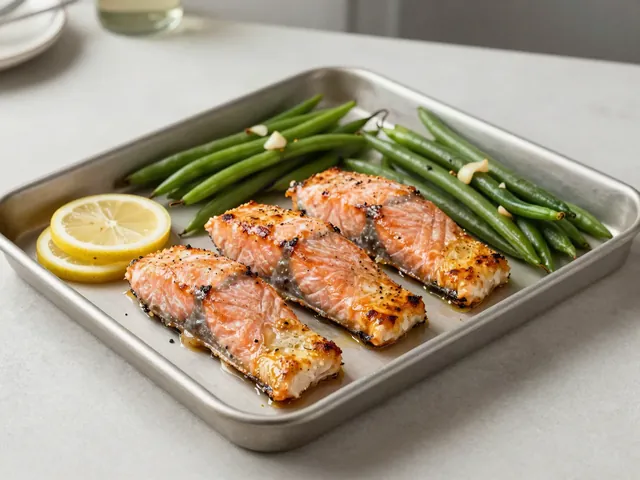
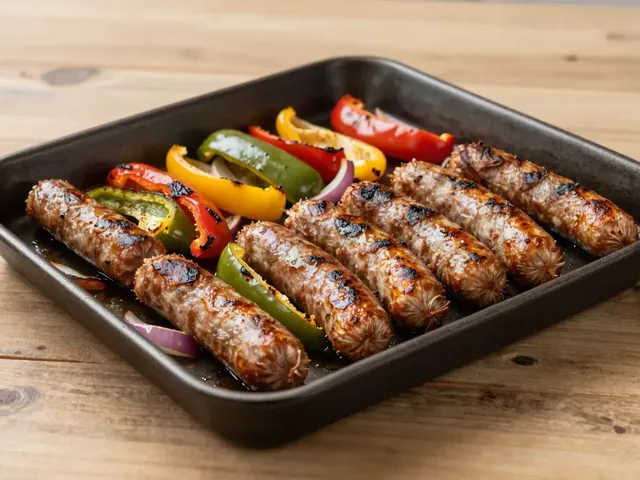
More from Sheet Pan Dinner Ideas
Read the guide
Ratings and reviews
Loading ratings…
Sources
- USDA FSIS — Safe Minimum Internal Temperature Chart (checked 2026-11-08)
Drafted with AI assistance and checked against the sources above by a human editor before publication. See our editorial policy and corrections.
Kitchen reference: How Long Does Cooked Chicken Last in the Fridge? · Cups to Grams and Other Kitchen Measurement Conversions · Safe Internal Temp for Chicken, Pork, Beef, Eggs and Fish
More dinners to try
All recipes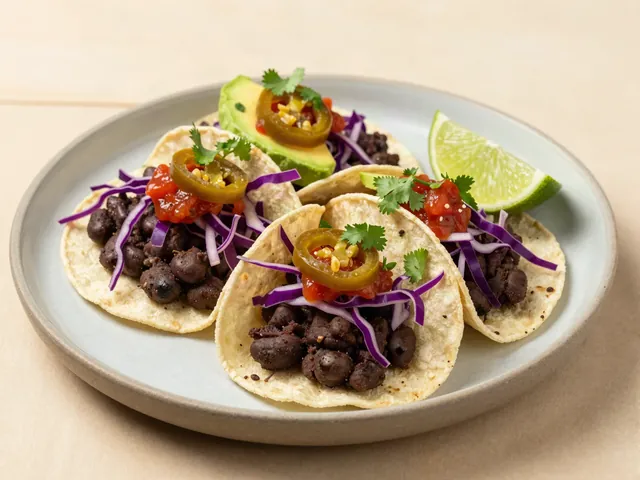
Pantry Black Bean Tacos
Black bean tacos from canned beans simmered with onion, garlic and cumin, lightly mashed and tucked into warm corn tortillas. Vegetarian, in 25 minutes.
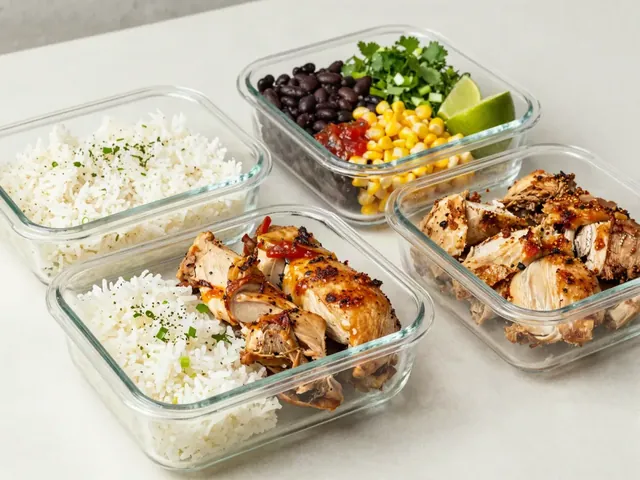
Meal-Prep Chicken Burrito Bowls
Chicken burrito bowls for meal prep: spiced roasted thighs, lime rice, black beans, corn and salsa in four containers for lunches. Chicken cooked to 165°F.
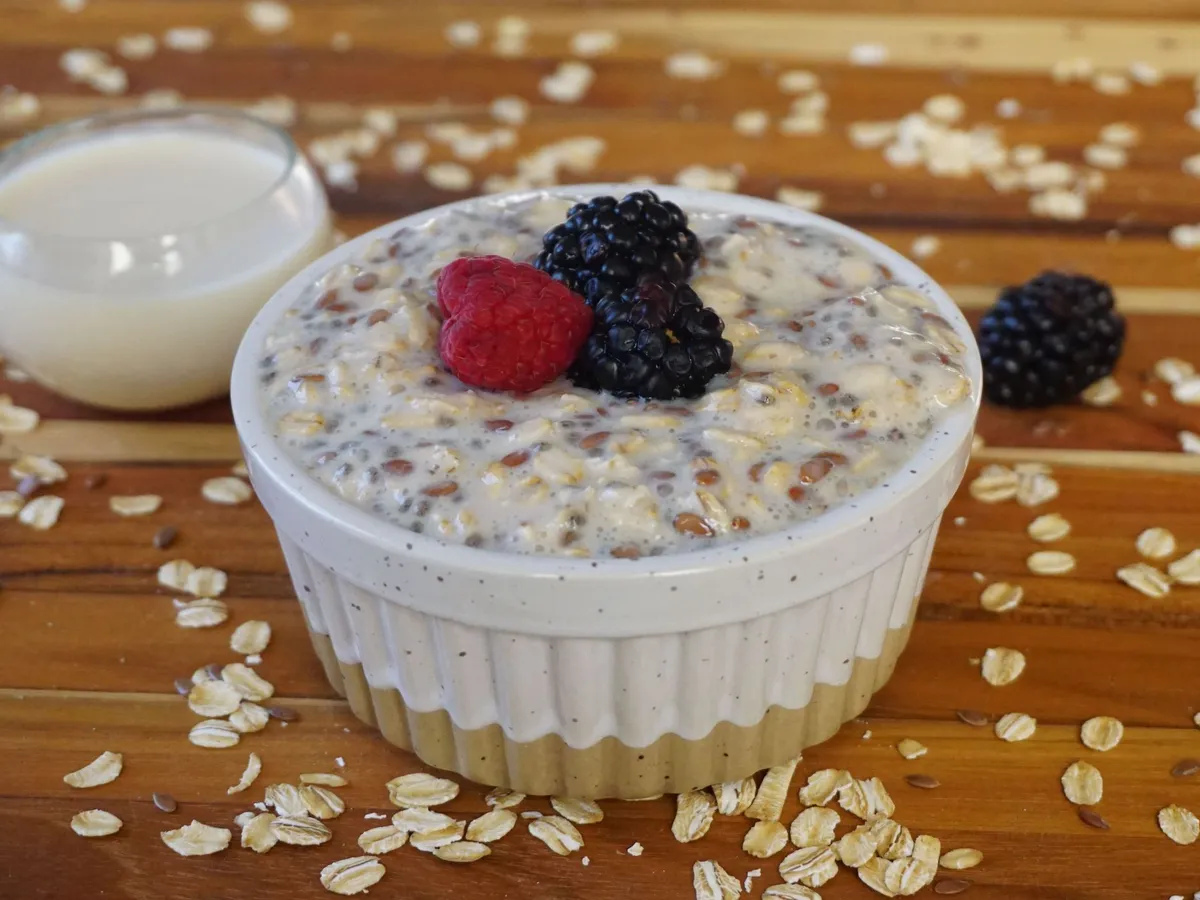
Make-Ahead Overnight Oats
Overnight oats with rolled oats, milk, Greek yogurt, chia and maple syrup. Mix four jars in 10 minutes for grab-and-go breakfasts, no cooking needed.
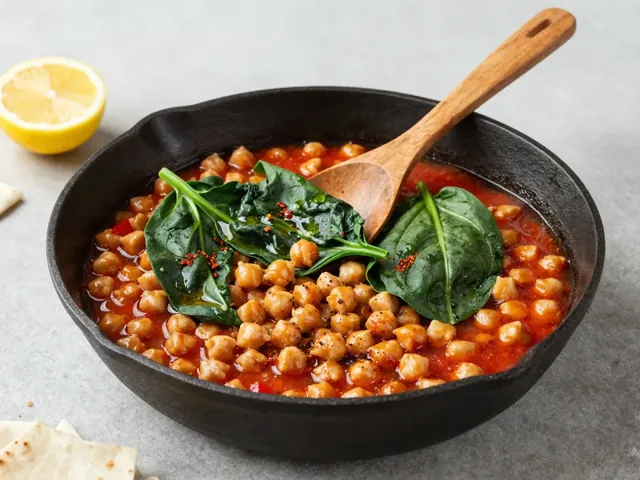
Pantry Chickpea and Tomato Skillet
A chickpea and tomato skillet from canned chickpeas, canned tomatoes and pantry spices, ready in 25 minutes. Serve with rice, crusty bread or a fried egg.