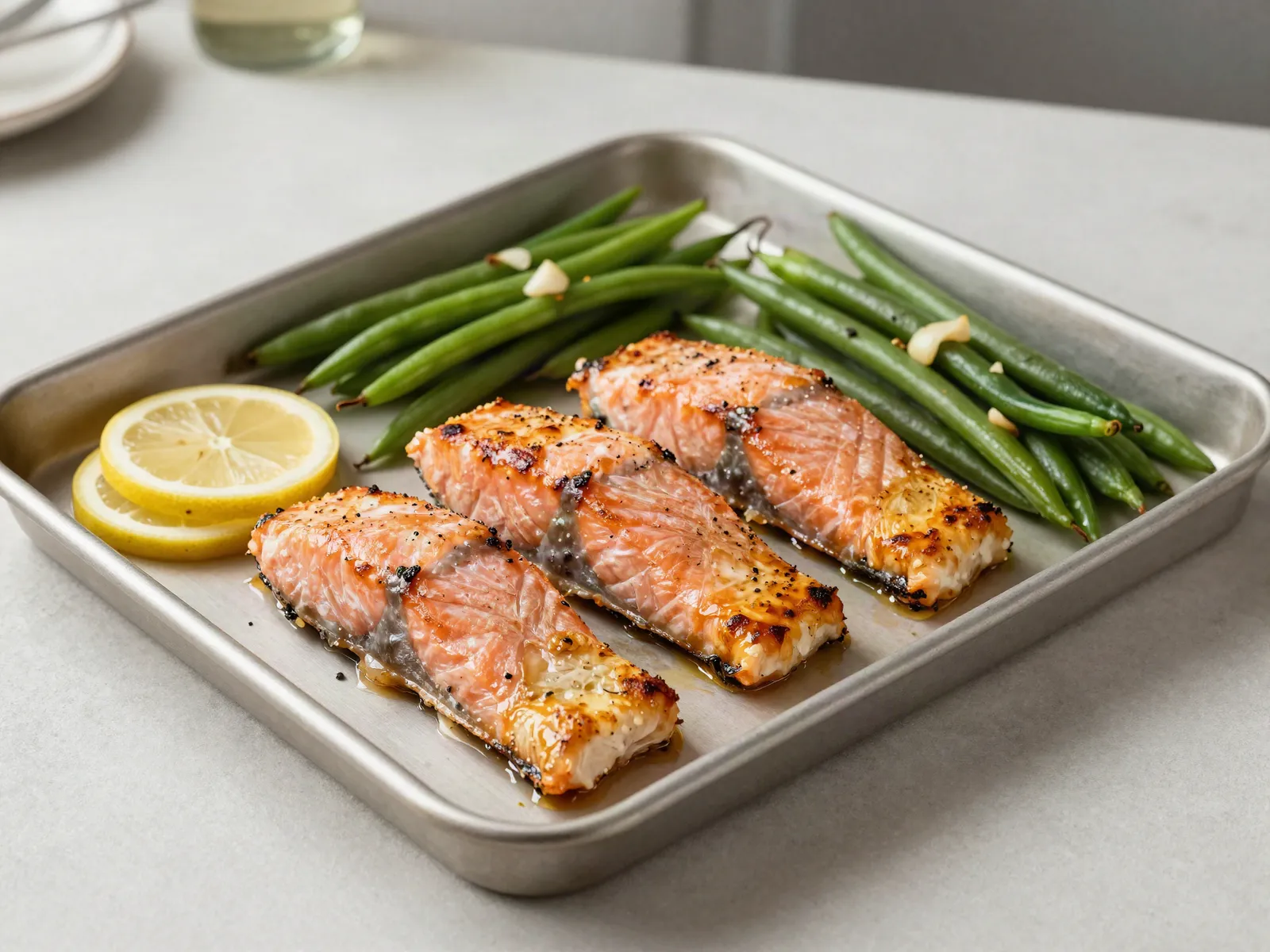
Sheet-Pan Salmon with Green Beans and Lemon
No ratings yetSheet pan salmon and green beans roasted with garlic and lemon in about 30 minutes, cooked to the USDA-safe 145°F. A simple one-pan weeknight dinner. Serves 4, ready in 32 minutes, about 490 calories per serving.
- Total
- 32min
- Serves
- 4
- Per serving
- 490cal
- Steps
- 6
Why this works
Green beans take longer than salmon, so they get a 10-minute head start. The fish then goes in the center of the pan, where it roasts gently while the beans finish and blister at the edges, and both are ready at the same time.
Sheet-Pan Salmon with Green Beans and Lemon
Sheet pan salmon and green beans roasted with garlic and lemon in about 30 minutes, cooked to the USDA-safe 145°F. A simple one-pan weeknight dinner.
- Prep
- 10 min
- Cook
- 22 min
- Total
- 32 min
- Serves
- 4
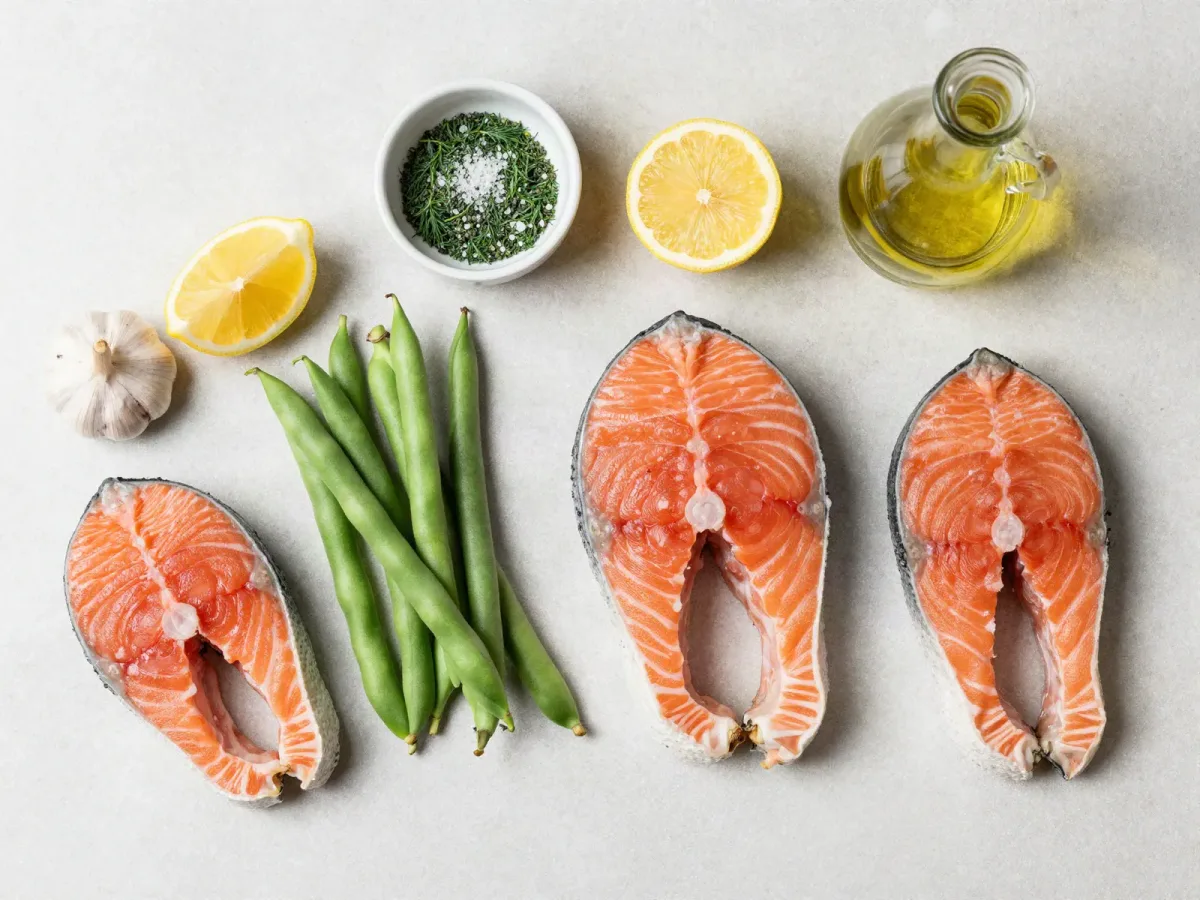
Ingredients
Scaling changes amounts only; pan size and cooking times may need adjusting. Metric amounts are rounded conversions.
Contains: fish
Instructions
- Heat the oven to 425°F with a rack in the center. Line a large rimmed sheet pan with foil or parchment, if you like.
What to look for
Set a rack in the center of the oven and heat it to 425°F. The center position surrounds the pan with the most even heat, which matters for fish, since the top of a fillet can overcook if it sits too close to the upper element. Allow the oven to preheat fully, usually 15 to 20 minutes, because the timing in the next steps assumes the oven is at temperature from the start.
Line a large rimmed sheet pan with foil or parchment if you like; it makes cleanup much easier and helps skin-on fillets release cleanly. Use the time to trim the stem ends from the pound of green beans and dry them thoroughly with a kitchen towel, since wet beans steam rather than blister in the oven.
- On the sheet pan, toss the green beans with 1 1/2 tablespoons of the oil, half the garlic, 1/2 teaspoon of the salt and half the pepper. Spread them out and roast for 10 minutes.
What to look for
Put the trimmed green beans on the sheet pan with 1 1/2 tablespoons of the oil, half the minced garlic, 1/2 teaspoon of the salt and half the black pepper. Toss with your hands until every bean looks glossy, breaking up any clumps of garlic so it is evenly scattered instead of sitting in piles that burn. Spread the beans in a single layer and roast for 10 minutes.
Green beans need roughly twice as long as a 1-inch salmon fillet, so this head start is what lets both finish together. After 10 minutes, the beans should have turned a brighter green, with a few small blistered spots, but they will still be firm. If you are using thin French-style beans, they cook faster, so cut the head start to about 6 to 7 minutes.
- Meanwhile, pat the salmon dry. Stir the remaining 1 1/2 tablespoons oil with the rest of the garlic, salt, pepper and the dill.
What to look for
While the beans roast, pat the salmon fillets dry on all sides with paper towels. A dry surface lets the garlic oil cling and helps the top of the fish brown lightly instead of turning pale and wet. Run your fingers over the flesh to check for pin bones, small white bones that sometimes remain; pull out any you find with clean tweezers.
If a fillet has a thin tail end, fold it underneath so the piece is an even thickness. In a small bowl, stir the remaining 1 1/2 tablespoons oil with the rest of the garlic, the remaining 1/2 teaspoon salt, the rest of the pepper and the 1/2 teaspoon dried dill or oregano, if using. The mixture should look loose and speckled. Wash your hands and anything that touched the raw fish.
- Push the green beans to the edges of the pan. Set the salmon in the center, skin side down, and brush the tops with the garlic oil. Lay the lemon slices over and around the fish.
What to look for
Take the pan out of the oven and set it on a heatproof surface. Use tongs to push the green beans toward the edges, clearing space in the center. Set the fillets in the middle, skin side down if they have skin, leaving a little room between them. The center of the pan is slightly gentler than the edges, which suits the delicate fish while the beans continue to blister around the outside.
Brush or spoon the garlic oil evenly over the tops and sides of the fillets. Lay the lemon slices over and around the fish; they perfume the salmon as it roasts and caramelize slightly at the edges. Work quickly so the pan does not cool down too much before it goes back into the oven.
- Roast until the salmon reaches 145°F in the thickest part on a food thermometer, or flakes easily with a fork and is opaque, 10 to 12 minutes. Thinner fillets will be done sooner.
What to look for
Return the pan to the oven and roast for 10 to 12 minutes; thinner fillets will be ready sooner, so start checking at about 8 minutes. The salmon is done when the flesh has turned from translucent, deep orange to opaque, lighter pink, and it separates into flakes when pressed gently with a fork at the thickest point.
For the most accurate check, insert a food thermometer horizontally into the thickest part of a fillet: it should read 145°F, the USDA safe minimum for fish. If the fillets differ in thickness, check each one and take them off as they reach temperature. If the salmon is done before the beans are as tender as you like, move the fillets to a plate and return the beans to the oven for a few more minutes.
- Squeeze the lemon wedges over the fish and beans and serve.
What to look for
Squeeze the lemon wedges over the hot salmon and green beans right away. The fresh juice brightens the roasted garlic flavor and balances the richness of the fish, and it tastes noticeably sharper than the roasted lemon slices already on the pan. Toss the beans in the pan juices, which carry garlic, oil and lemon.
For skin-on fillets, slide a thin spatula between the skin and the flesh to lift the fish off neatly, leaving the skin behind on the pan if you prefer not to eat it. Serve each fillet with a portion of green beans and a couple of the roasted lemon slices. Salmon continues to cook slightly from its own heat once it leaves the oven, so serve promptly to keep it moist.
Supper HQ · https://supperhq.com/recipes/sheet-pan-salmon-green-beans/
Good to know
Swaps & substitutions
| Ingredient | Why it's there | Substitute | What changes |
|---|---|---|---|
| Salmon fillets | Rich, quick-roasting protein | Arctic char, steelhead trout, cod or halibut fillets about 1 inch thick | Char and trout are similar; cod and halibut are leaner and milder, and still cook to 145°F |
| Green beans | Vegetable that roasts with the fish | Thin asparagus, broccoli florets or snap peas | Thin asparagus goes in with the salmon; broccoli needs the 10-minute head start; snap peas need only about 8 minutes total |
| Olive oil | Helps browning and carries the garlic | Avocado oil, or melted butter for the salmon only | Avocado oil is neutral; butter adds richness and milk but browns faster |
| Fresh garlic | Aromatic flavor on fish and beans | 1/2 tsp garlic powder, divided | Milder and never burns, but less fresh flavor |
| Lemon | Bright flavor, roasted and fresh | 1 orange, sliced and cut into wedges, or 1 lime | Orange is sweeter and softer; lime is sharper |
| Dried dill or oregano | Optional herb note | Dried thyme, Italian seasoning or 1 tbsp fresh chopped dill added after roasting | Thyme is earthier; fresh dill gives a brighter, grassier flavor |
| Kosher salt | Seasons fish and beans | Half the amount of fine sea salt or table salt | Finer salt is saltier by volume, so use about half as much |
Tips & common mistakes
- Give the green beans their full 10-minute head start before the salmon goes on.
- Pat the salmon dry so the garlic oil clings.
- Check the thickest part of the fish with a thermometer; it should reach 145°F.
- Check thinner fillets a few minutes early.
- For skin-on fillets, slide a thin spatula between the skin and flesh to lift the fish off cleanly.
Common mistakes
- Overcooking the salmon. Past 145°F, salmon turns dry and chalky, and white protein beads up on the surface. Start checking a few minutes early and pull the pan as soon as the thickest part reaches 145°F.
- Roasting wet green beans. Beans still damp from washing steam instead of blistering. Dry them well with a towel before tossing with oil.
- Leaving thin tail ends flat. The thin end of a fillet overcooks before the thick center is done. Fold the tail under so the fillet is an even thickness.
- Letting the garlic on the beans burn. Minced garlic sits in the oven for the whole cook time. Spread it evenly instead of in clumps, and if bits darken early, toss them under the beans.
Storage & make-ahead
Refrigerate leftovers in a covered container. Reheat to 165°F, the USDA's minimum for leftovers, or flake cold salmon into a salad.
- Prep ahead: trim the green beans and refrigerate them dry in a covered container. Mince the garlic and slice the lemon earlier in the day and keep them covered in the refrigerator. Cook the salmon just before serving.
- Leftovers: refrigerate within 2 hours in shallow containers and eat within 3 to 4 days.
- Freezing: cooked salmon can be frozen in an airtight container, but it turns drier and flakier, so it suits salads, pasta or rice bowls better than serving as a fillet. Green beans lose their snap and turn limp after freezing. For best quality, use within 3 to 4 months.
- Thawing: thaw in the refrigerator, in cold water or in the microwave. Reheat gently and covered so the fish does not dry out further.
Nutrition per serving
- Calories
- 490
- Protein
- 37 g
- Carbs
- 10 g
- Fiber
- 3.5 g
- Sugar
- 4 g
- Fat
- 33 g
- Sat. fat
- 7 g
- Sodium
- 570 mg
How we calculated this
Approximate values for 1 of 4 servings, calculated from the ingredient list using USDA FoodData Central data (computed 2026-11-08). Raw ingredient weights are used, so fat lost in cooking is not subtracted, and brands vary, especially for sodium in broth, beans and salsa. Not a substitute for professional dietary advice.
Quick answers
How do I know when salmon is done?
The USDA's safe minimum for fish is 145°F, measured in the thickest part. Without a thermometer, the fish should be opaque and separate easily with a fork. A 1-inch fillet usually needs 10 to 12 minutes at 425°F.
Can I use frozen salmon?
Thaw it first, overnight in the refrigerator or sealed in a bag under cold water, then pat it very dry. Roasting from frozen makes it hard to time the fish with the green beans.
Can I swap the green beans?
Asparagus works and can go on the pan at the same time as the salmon if the spears are thin. Broccoli florets need the same 10-minute head start as green beans.
Should I eat the salmon skin?
It is edible and many people enjoy it, though skin roasted on a sheet pan turns soft rather than crisp. It also helps hold the fillet together and protects the underside from overcooking. If you do not want to eat it, roast with the skin on anyway and slide the flesh off with a spatula when serving.
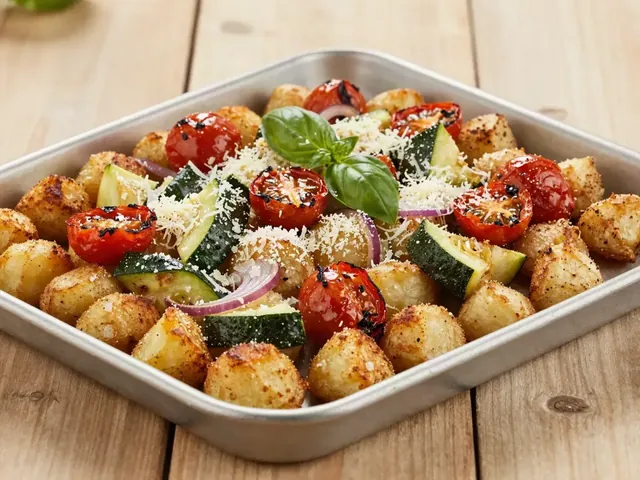
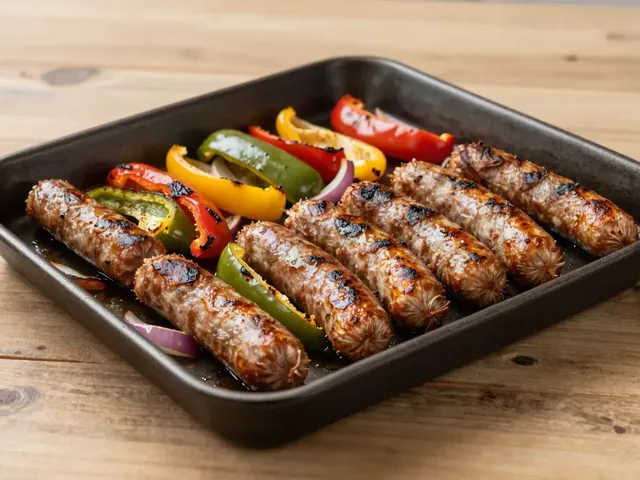
More from Sheet Pan Dinner Ideas
Read the guide
Ratings and reviews
Loading ratings…
Sources
- USDA FSIS — Safe Minimum Internal Temperature Chart (checked 2026-11-08)
Drafted with AI assistance and checked against the sources above by a human editor before publication. See our editorial policy and corrections.
Kitchen reference: How Long Does Cooked Chicken Last in the Fridge? · Cups to Grams and Other Kitchen Measurement Conversions · Safe Internal Temp for Chicken, Pork, Beef, Eggs and Fish
More dinners to try
All recipes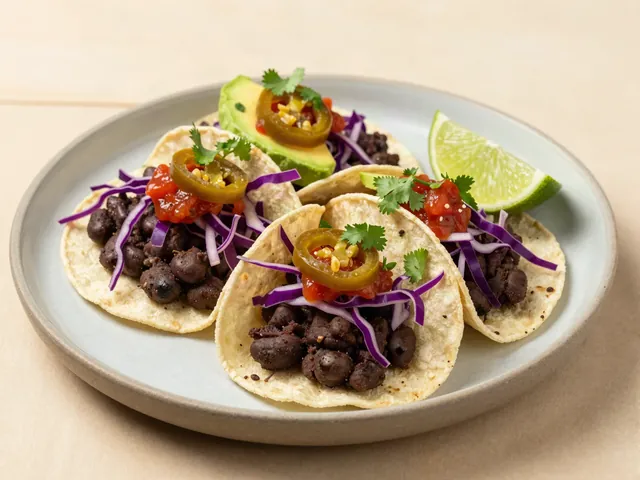
Pantry Black Bean Tacos
Black bean tacos from canned beans simmered with onion, garlic and cumin, lightly mashed and tucked into warm corn tortillas. Vegetarian, in 25 minutes.
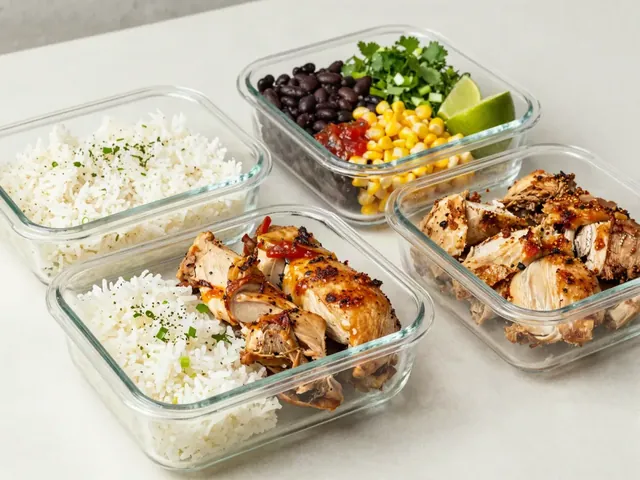
Meal-Prep Chicken Burrito Bowls
Chicken burrito bowls for meal prep: spiced roasted thighs, lime rice, black beans, corn and salsa in four containers for lunches. Chicken cooked to 165°F.
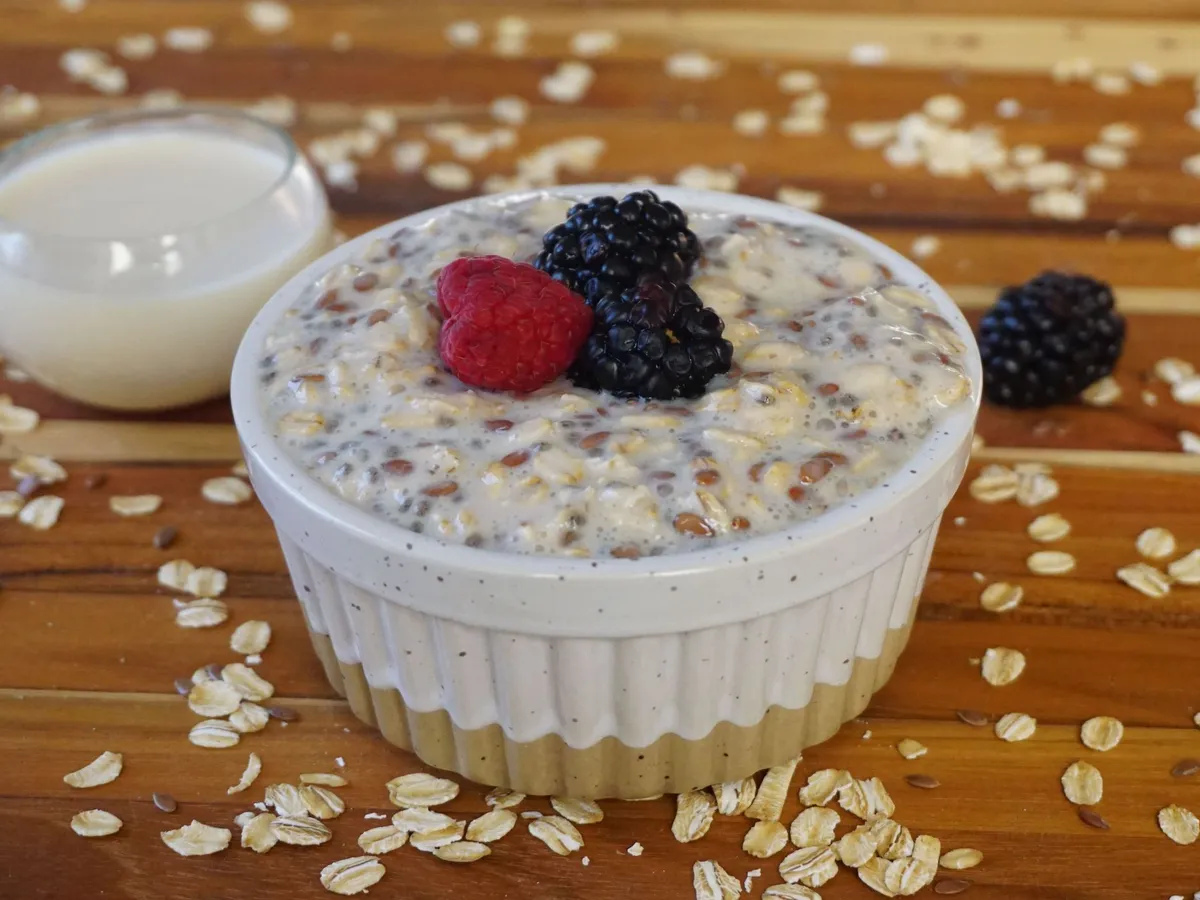
Make-Ahead Overnight Oats
Overnight oats with rolled oats, milk, Greek yogurt, chia and maple syrup. Mix four jars in 10 minutes for grab-and-go breakfasts, no cooking needed.
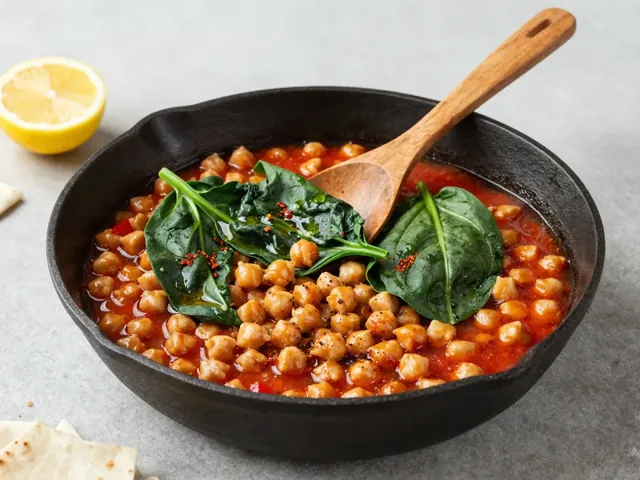
Pantry Chickpea and Tomato Skillet
A chickpea and tomato skillet from canned chickpeas, canned tomatoes and pantry spices, ready in 25 minutes. Serve with rice, crusty bread or a fried egg.